Creating a steady current of future energy innovators
How Current Chemistry Investigators is doing their part to close Ireland’s electrochemistry skills gap.
The clean energy transition is changing our everyday lives, from how we power and heat our homes, to how our cars and public transport run. Keeping up this momentum will require major advances in technologies that generate, store and use energy efficiently.
At the heart of many of these technologies, from electric vehicle batteries to solar cells, is a field called electrochemistry: the study of chemical processes that cause the movement of electrons and ions.
As demand for renewable energy systems and energy storage solutions continues to grow, so too does the need for expertise in electrochemistry. Yet in Ireland, this field has long struggled to resonate with students and teachers alike. At the beginning of the Current Chemistry Investigators (CCI) project, it was an optional topic on the Leaving Certificate chemistry curriculum, and was one of the least-attempted and poorest–answered topics in the exam, creating a skills gap in a field that is becoming increasingly important for Ireland’s clean energy future.
Dr John O’Donoghue, Royal Society of Chemistry (RSC) Education Coordinator in Trinity College Dublin developed CCI to help address this challenge. Funded through the Research Ireland Discover Programme, the project has brought together researchers, teachers, students and communities across Ireland to ‘spark conversations’ about electrochemistry, batteries, and clean energy technologies. CCI set out to demystify electrochemistry by making it relevant, hands-on, and fun, adopting a three-pronged approach to engagement: school workshops, teacher professional development, and public engagement activities.
The team, working closely with PhD students and teachers, co-created a problem solving-based workshop where students become detectives tasked with investigating a suspicious battery failure. Through analysing the electrolyte from a battery, student detectives must use their findings to single out the culprit from a list of three suspects. This gamified approach to lab work brings context and excitement to the applications of electrochemistry and analytical chemistry in the wider world. The workshop is delivered through the ‘scientist in a classroom model’, where chemistry PhD candidates from partner institutions serve not only as workshop facilitators, but as tangible role models, helping students view careers in chemistry as more both visible and achievable.
Over the course of five years, CCI delivered 261 workshops to over 5,000 students from 111 schools. 81% of students felt it was useful for their studies, and the workshops resulted in a substantial shift in students’ understanding of electrochemistry. Teachers highlighted practical laboratory skills, teamwork, real-life applications and speaking with researchers among the strongest aspects of the workshop. Some teachers also reported an increased interest in students choosing science subjects for Senior Cycle, as well as an increased number choosing to continue to study science after school.
Inspiring students was only part of the challenge – teachers needed inspiration too. The CCI team partnered with the RSC, Irish Science Teachers‘ Association (ISTA) and other stakeholders to deliver 17 professional development activities to 581 science teachers from right across the country. This included supporting teachers with the revised Leaving Certificate Chemistry curriculum, which introduced electrochemistry as a core topic for the first time in 2025.
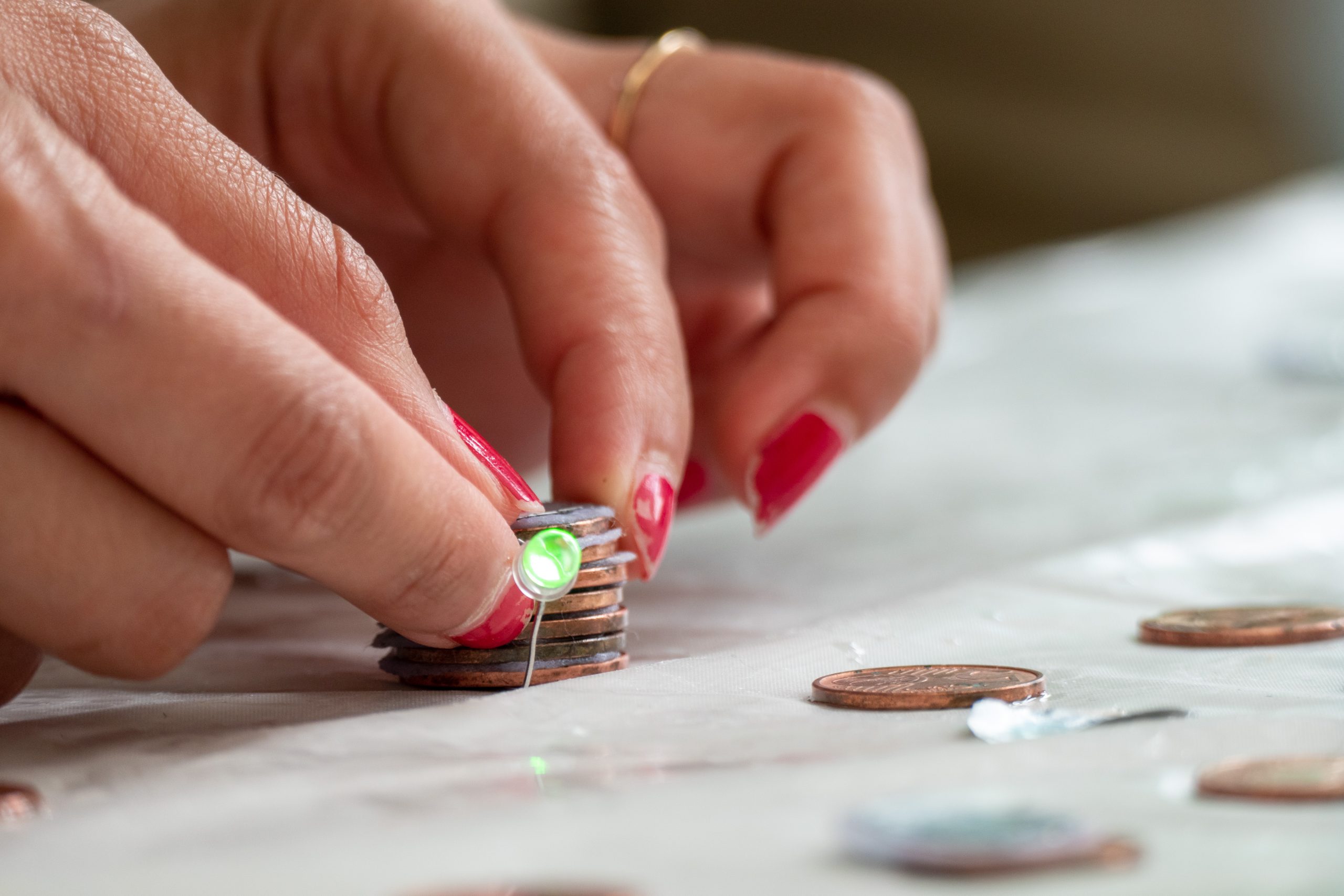
CCI also took electrochemistry far beyond the classroom. At public events, participants could build their own batteries from everyday materials such as Play-Doh, aluminium foil and coins. This workshop travelled to 22 public and community events, creating a tangible link between electrochemistry and the batteries that power modern life. CCI engaged with over 50,000 people over the project’s lifespan, with a satisfaction score of 93% collected from over 8,000 respondents at public events.
Importantly, the impact is also being felt by the facilitators – the researchers at the core of the project’s delivery. Over 100 PhD and postdoctoral researchers have been involved with CCI, developing skills in science communication, teaching and leadership, while acting as tangible role models for the next generation. Some facilitators highlighted that the experience reminded them why they enjoyed science in the first place.
Five years on, CCI has helped bring the concept of electrochemistry out of textbooks and into communities across Ireland. While the project has now concluded, its legacy lives on through the wealth of free resources for students and teachers made available through their website and through physical posters adorning the walls of classrooms all over Ireland. CCI has helped build curiosity and the lasting knowledge needed to keep these critical conversations on Ireland’s clean energy future flowing.
Running alongside the theme of green energy, one of the goals of CCI has always been to support and encourage early career researchers to develop their engagement skills, which benefits schools, the public and the researchers themselves.
– Dr John O’Donoghue, CCI co-founder and project manager, RSC Education Coordinator, Trinity College Dublin
Who is involved?
Trinity College Dublin, Atlantic Technological University Sligo, University College Cork, Tyndall National Institute, Lifetime Lab
Find out more:
Learn more about CCILearn more about CCI CCI Impact ReportCCI Impact Report
Image caption: An aluminium-air coin cell battery powering a green LED. Image credit: Conor Harford