Four-year Irish-led study to examine new treatment approach for coronary artery disease
Academic-industry partnership to trial a lower-risk heart disease treatment using advanced imaging
Minister for Further and Higher Education, Research, Innovation and Science, James Lawless TD, has today announced a new €2 million Research Ireland Strategic Partnership Programme award to support a major Irish-led clinical study aimed at improving treatment for coronary artery disease.
The four-year programme will be led by Prof. Patrick Serruys, Prof. Yoshinobu Onuma, and Prof. Faisal Sharif at the University of Galway. The study, titled ‘Transforming Coronary Artery Disease Treatment: Acetyl Salicylic Elimination After Drug-Coated Balloon With Optical Coherence Tomography (ASET-DCB OCT) Guidance To Improve Outcomes And Reduce Bleeding Risks’, is co-funded by Research Ireland and B. Braun Melsungen AG, with additional, in-kind support from Abbott Laboratories.
Announcing the award, Minister Lawless said:
Clinical trials of this calibre are essential to improving patient care and building a stronger, more innovative health system. Coronary artery disease remains the leading cause of mortality on the island of Ireland, making this Irish-led research particularly important. By supporting this study, we are investing in evidence that can help improve outcomes for patients while reinforcing Ireland’s reputation as a leader in health research. This funding reflects the Government’s commitment to backing research that makes a real difference to people’s lives.
Welcoming the announcement, Dr Diarmuid O’Brien, CEO of Research Ireland, stated:
Partnerships such as this – connecting pioneers in interventional cardiology with leading global MedTech companies – are critical to creating research with tangible impact for patients and their families. Such collaborations help to generate evidence that can inform safer and more effective treatment, while strengthening Ireland’s capacity to deliver clinical research at scale.
Coronary artery disease is the leading cause of death in Ireland. Current treatment approaches typically involve the placement of a stent in the artery, and prescription of dual blood-thinning medication for an extended period after the procedure. While effective, this approach can increase the risk of bleeding for some patients.
The ASET-DCB OCT study is a first-of-its-kind trial, examining whether aspirin can be eliminated entirely after treatment using a drug-coated balloon, which restores blood flow without leaving a permanent implant behind. The study will also use advanced intravascular imaging techniques to closely examine how arteries heal following treatment, and to assess whether patients can be treated safely with fewer blood-thinning medications post-procedure.
Prof. Patrick Serruys, lead of the study, said:
The future of interventional cardiology lies in precision treatment — selecting the right device, the right imaging, and the right pharmacological strategy for each individual patient. This initiative represents an important step towards that goal.
The ASET-DCB OCT study will be delivered through the CORRIB Research Centre for Advanced Imaging and Core Laboratory, in collaboration with Galway University Hospital, St. James’ Hospital Dublin and University Hospital Cork. A total of 15 positions will be supported over the duration of this award, including three full-time PhD students, as well as 12 others in various research and clinical support roles, helping to build capacity in cardiovascular research and the clinical trial ecosystem in Ireland.
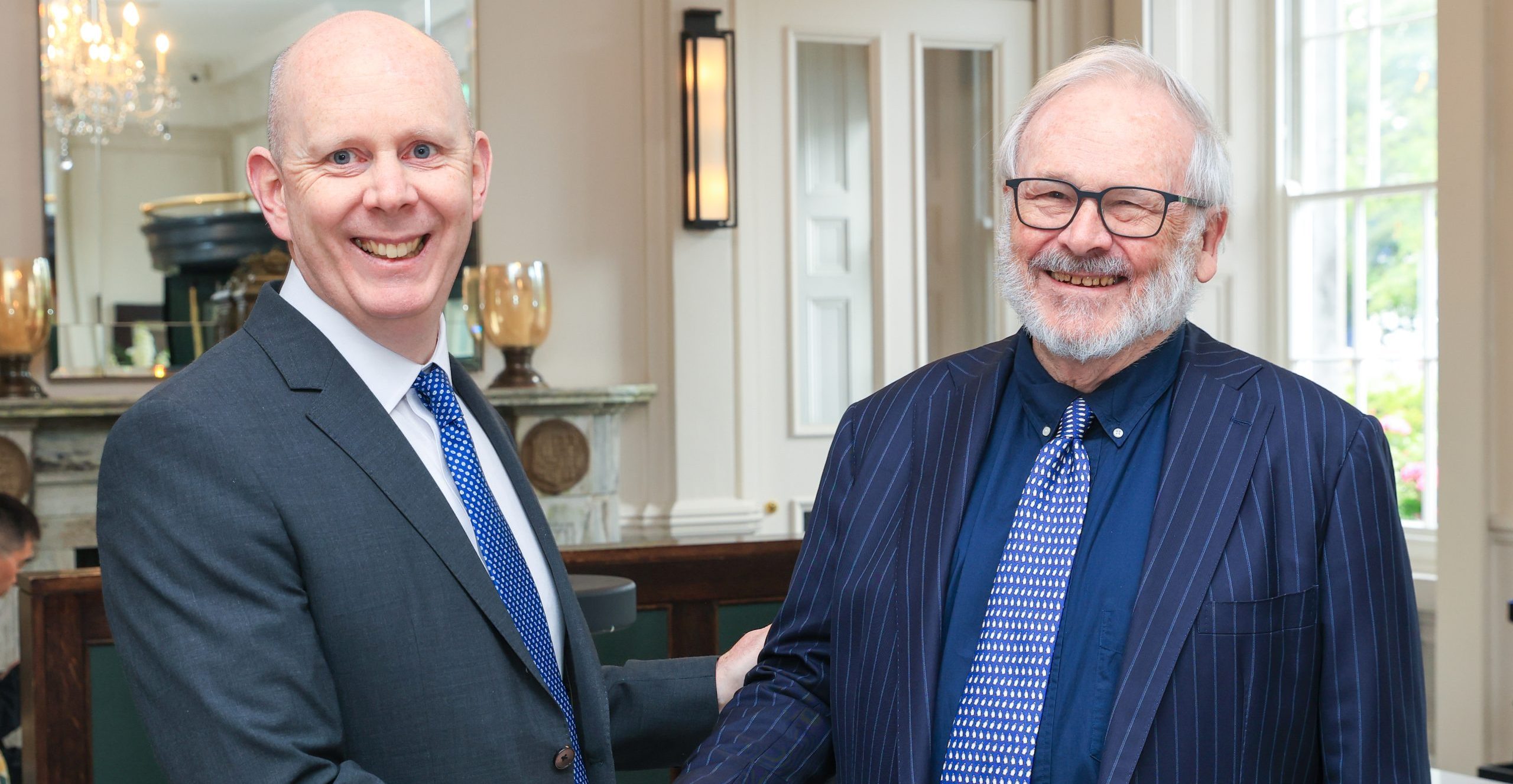
Photo caption: Dr. Diarmuid O’Brien, CEO of Research Ireland (left) with Prof. Patrick Serruys, lead of the ASET-DCB OCT study (right). Image credit: Martina Regan Photography