Looking beyond the farmer: research reveals hidden pressures on Irish farm families
Over 99% of Irish farms operate as family enterprises, where the boundaries between work and home life are often blurred. Yet, while the pressures facing farmers are well documented, behind many farms is an often-overlooked support network of family members whose experiences are less well understood.
The FarmFaMHealth project, led by Dr Anna Donnla O’Hagan and Professor Siobhán O’Connor at Dublin City University and funded through the Research Ireland COALESCE programme, set out to address this gap.
A new report from the project has revealed the unseen and overlooked mental health struggles of Irish farm family members, including partners, parents and children. While the mental health struggles and psychological demands on primary farmers are widely documented, the research found that wider farm family members experience similar mental health challenges, but often fail to seek help before they reach a point of severe crisis.
Based on responses from 447 farm family members across Ireland, the report highlights how spouses and children frequently function as an “invisible workforce”, bearing the weight of unpaid labour, intense domestic burdens and severe role overload. The research reveals a stark picture of the “dual burden” facing farm families: 68% of surveyed family members are employed off-farm, with 57% working full-time, yet 43% still perform daily physical farm labour.
The report found that spouses, particularly women, frequently manage household duties, childcare and farm administration while working off-farm to keep the business financially viable, often without formal wages or recognition. It also found that 60% of participants had not sought help for mental health issues. Traditional expectations of stoicism and self-reliance remain significant barriers to help-seeking among farm family members.
Prof. Siobhán O’Connor, co-lead on the project, explained:
Previous research has focussed almost exclusively on primary farmers. However, our qualitative phase showed that spouses and children face identical pressures. Because they don’t view themselves as the primary farm operator, they do not tend to engage with available supports. They suffer in silence, many juggling off-farm employment and daily manual labour to keep the farm afloat.
Alongside the report, the team have developed a bespoke mental health training programme designed specifically for farm family members. The programme centres on early prevention, help-seeking and daily mutual support, rather than crisis management. The training grounds mental health awareness in the realities of farm life by linking it directly to everyday stressors such as succession planning, financial pressures and regulatory inspections. Participants are equipped with the knowledge and confidence to recognise when someone may be struggling, helping to encourage earlier help-seeking and strengthen support networks within rural communities.
The free one-hour regional training sessions are taking place in Cork, Louth, Clare and Donegal, with further workshops planned in response to local demand.
To find out more about the FarmFaMHealth project, access the report, or register for upcoming mental health training for farm family members, visit the project website.
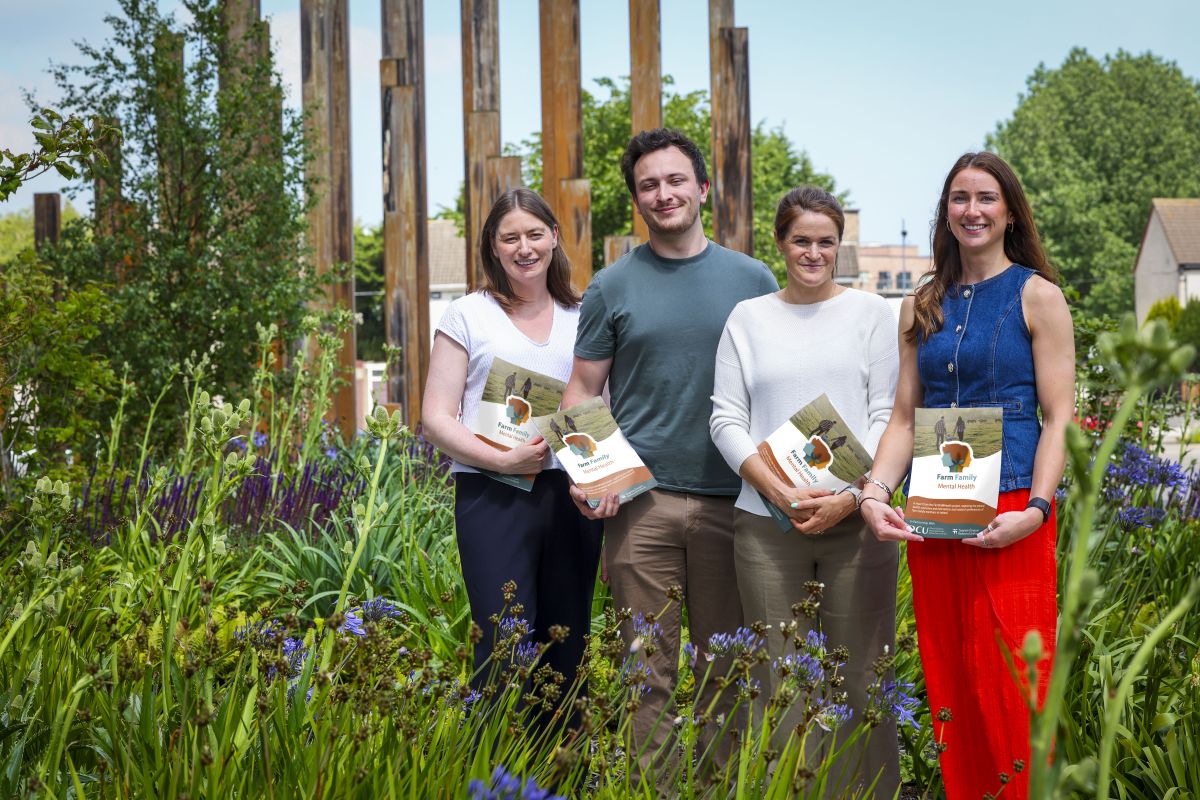
Image caption: The team behind the report. From left: Professor Siobhán O’Connor, Jack Sweeney, Assistant Professor Anna Donnla O’Hagan, and Dr Sinéad O’Keefe. Photo credit: Kyran O’Brien