First-ever report on crime and security journalism in Ireland launched
All-island study explores the role of crime and security journalism in Irish democracy in partnership with the Irish Council for Civil Liberties
A Research Ireland-funded study, conducted in partnership with the Irish Council for Civil Liberties (ICCL), has today launched a report that explores the threats faced by journalists reporting on crime and security, from state and non-state actors, changes to the news industry, and disinformation.
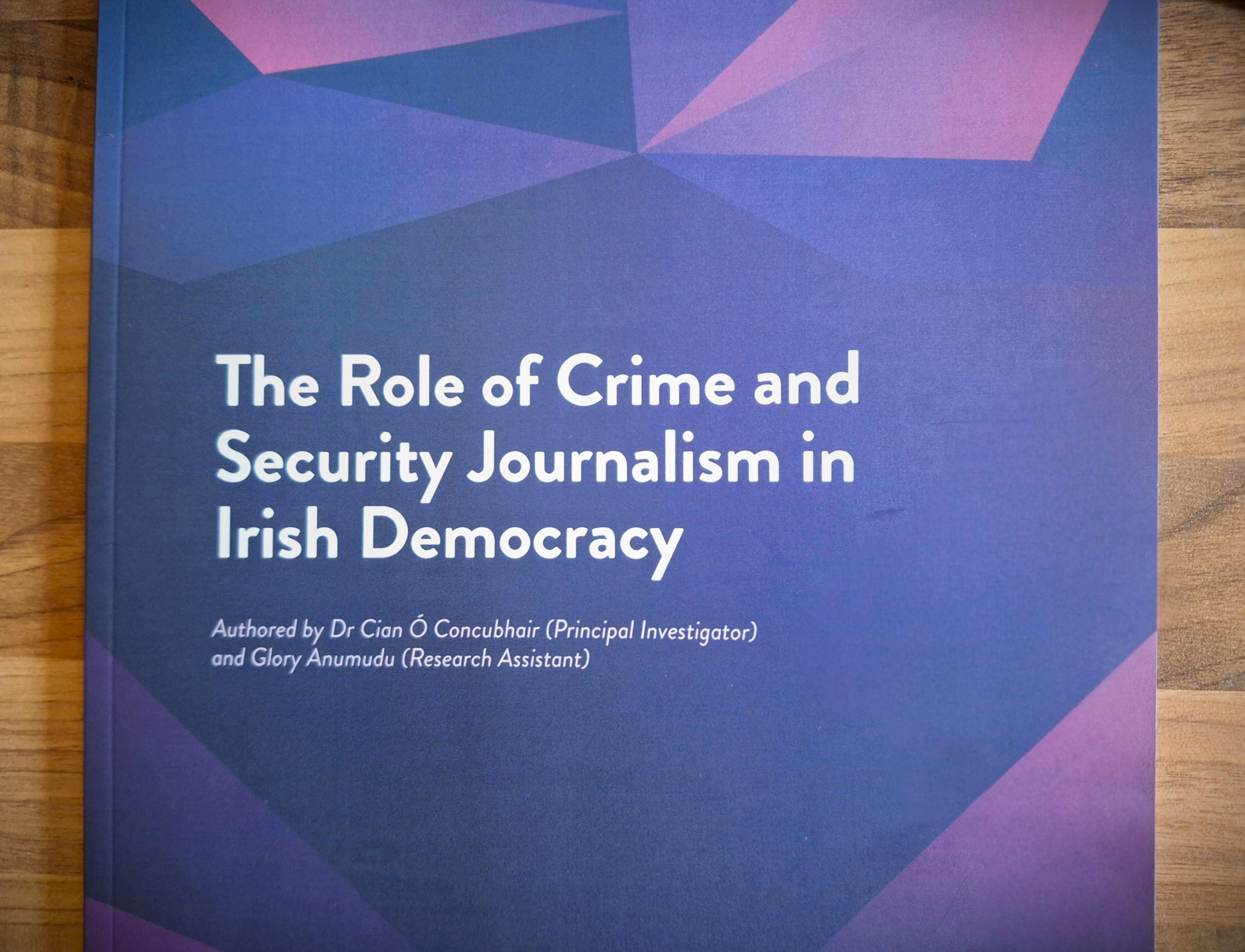
Co-authored by Dr Cian Ó Concubhair from Maynooth University School of Law & Criminology, and Glory Anumudu, the study titled ‘The Role of Crime and Security Journalism in Irish Democracy’ included interviews with 23 journalists who report on crime and security in the North and South of Ireland, in local and national news organisations. The participants include specialist crime and security journalists, as well as generalists who have significant experience reporting on crime and security issues.
Journalistic privilege
The research, supported via a Research Ireland New Foundations award, explores the ability of journalists to protect their confidential sources in Ireland, and journalists’ confidence in legal protections.
The report reveals that Irish journalists are routinely questioned by members of An Garda Síochána in an effort to identify their confidential sources. Some participants in the South felt that privilege was protected less by legal rights and more by current political restraint. Participants in the North were more confident in the capacity of the legal system to protect journalistic privilege but did not believe that the PSNI respected journalists’ need to protect confidential sources.
Olga Cronin, Head of Policy at ICCL, said:
Even if done voluntarily, the questioning of journalists in this manner could have a chilling effect on Irish journalism, especially in situations where journalists are seeking to pursue stories of Garda misconduct. We need legislation supporting the rights of journalists.
Participants in the study highlighted concerns around issues of transparency and accountability, and the undermining of objective reporting on policing in Ireland. Several participants from the North and the South also described being subject to surveillance.
The highly gendered experiences of crime and security journalism was also revealed, with most female participants describing deeply sexist interactions with peers and policing and security sources.