Research Ireland Fellowships to put research at the heart of public service transformation
Research Ireland initiative helping to strengthen evidence-informed policy, decision-making and public trust.
Research Ireland has today announced details of the agency’s largest Public Service Fellowship programme.
The programme offers academic researchers a unique opportunity to be seconded to Government Departments and Public Sector Bodies to work in partnership on issues of national importance. This enables the exchange of expertise and fosters public sector innovation, whilst giving researchers valuable insight into government decision-making and policy development.
Participation in the Fellowship has more than tripled since it was first piloted in 2019. Under this year’s programme, 41 researchers have been awarded funding totalling €3.9 million. The funded projects involve 24 host organisations.
Making the announcement during Public Service Transformation Week (November 9th-13th), Dr Ruth Freeman, Director of Research for Society at Research Ireland, said:
Research Ireland’s Public Service Fellowship programme connects researchers with public sector organisations to turn research expertise into real-world impact. We are pleased to partner with 24 organisations in offering researchers an opportunity to collaborate with public sector leaders. This facilitates the exchange and sharing of expertise towards addressing national and global challenges, and supports evidence-informed approaches across the public sector. From improving health and wellbeing to enhancing online safely and food security, these awards will harness the power of collaborative research to make a real difference to communities across Ireland.
The theme of Public Service Transformation Week 2026 is Stronger Together: Delivering the Public Services of the Future, in recognition of the vital contribution that research and academic expertise can make in supporting delivery of Ireland’s public service transformation strategy, Better Public Services.
Projects supported by the 2026 Public Service Fellowship programme include:
- Investigating the opportunity to future proof households from energy price fluctuations (Kodeeswaran Sankararaj, University of Galway, will be seconded to the Sustainable Energy Authority of Ireland): This research will examine how domestic energy storage could give people greater control over their energy costs while supporting Ireland’s transition to a cleaner electricity system, particularly for vulnerable and low-income households.
- Supporting the effective implementation of Ireland’s Online Safety Framework (Eoin Whelan, University of Galway, will be seconded to the Department of Culture, Communications and Sport): This research will explore how disinformation affects people, how it can be tackled, and how measures to protect young people online could work, providing evidence to inform Ireland’s digital policies.
- Nowcasting and forecasting influenza hospitalisations using particle filter multivariate data assimilation (Jason Wyse, Trinity College Dublin, will be seconded to the Health Service Executive): By combining different sources of real-world health data to produce a model of influenza-transmission, this research will improve our ability to predict flu-related hospitalisations, helping health services better understand and respond to changing patterns of influenza.
- Enhancing health equity for underserved communities (Joanne Hurst, University of Galway, will be seconded to the Health Service Executive): This research will help improve access to vaccines by identifying communities facing barriers to vaccination and designing targeted, community-based services to better meet their needs.
- Developing a shared care model for an integrated approach to healthcare for people in prison in Ireland (Anna Chatzi, University of Limerick, will be seconded to the Health Service Executive and the Irish Prison Service): This project will define and pilot a shared care model to support high-quality prison healthcare and better coordinate care planning for the transition from custody to the community.
- Measuring impact across rural development policy (Aisling Murtagh, University of Galway, will be seconded to the Department of Rural and Community Development and the Gaeltacht): The project will develop frameworks to measure the impact of rural development policies, and use data and mapping to help identify underserved communities and inform policies that support vibrant, resilient rural areas.
- Mapping of supports and services available to students with disabilities across tertiary education (Aoife Price, University College Cork, will be seconded to the Department of Further and Higher Education Research, Innovation and Science): The project will inform the development of a policy framework to help ensure students with disabilities receive flexible and tailored support throughout further and higher education.
- Measuring and implementing effective inclusion policies in primary and secondary education (Cormac Forkan, University of Galway, will be seconded to the Department of Education and Youth): This project will explore the social and economic benefits of inclusive primary and secondary education and how inclusive education systems can secure public and political support.
- An investigation of whether investment in the arts, culture and wider creative industries benefits society in Ireland (Harikrishnan Sasikumar, Dublin City University, will be seconded to the Department of Culture, Communications and Sport): This project will examine how investment in the arts, culture and creative industries affects public participation, economic opportunities in these sectors, and the vibrancy of cities, towns and villages.
- Dietary supplements in Ireland: regulatory oversight and consumer protection (Maame Ekua Manful, Technological University Dublin, will be seconded to the Department of Health): The project will explore how dietary supplements are marketed, regulated and used in Ireland to identify misleading claims, assess the scientific evidence and support stronger consumer information and oversight.
- Predicting temporal and geographical risk of food and drinking water non-compliance due to chemical hazards in Ireland (Nastaran Sharifian, University of Galway, will be seconded to the Food Safety Authority of Ireland): This research will use AI and advanced data analysis to identify influences on the occurrence of chemical hazards in Ireland and support the design of national chemical monitoring and surveillance programmes.
- Generation Engage: understanding young people, elections and democracy in Ireland (Rory Costello, University of Limerick, will be seconded to The Electoral Commission): The project will investigate what influences young people’s participation in elections in Ireland and identify ways to encourage greater engagement in the democratic process.
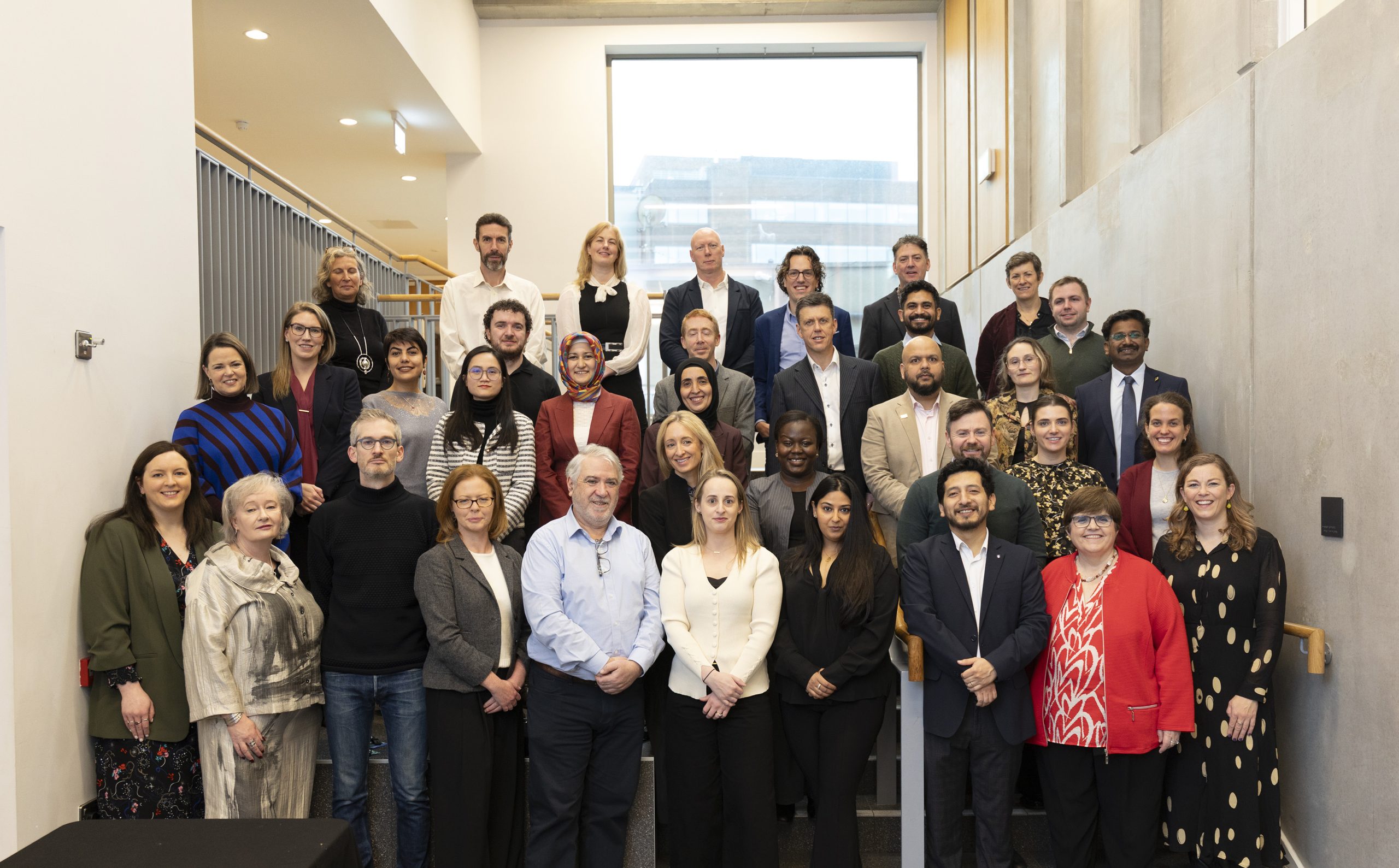
Image Caption: Research Ireland Public Service Fellows pictured at the Royal Irish Academy of Music marking Public Service Transformation Week. The Fellowship programme offers researchers a unique opportunity to be seconded to Government Departments and Public Sector Bodies to work in partnership on issues of national importance. Photo by Jason Clarke.