Ronan Lordan- Reflections from the 75th Lindau Nobel Laureate Meeting
My name is Ronan Lordan, and I am a circadian biologist. I’m a Senior Postdoctoral Researcher and NeuroAdapt Marie Skłodowska-Curie Fellow at the FutureNeuro Research Centre for Translational Brain Science, the Tissue Engineering Research Group, and the School of Pharmacy and Biomolecular Sciences at RCSI University of Medicine and Health Sciences. My research focuses on the role of circadian rhythms in neuroimmunology, particularly in bipolar disorder.
Our internal biological clocks regulate nearly every aspect of physiology, from sleep and hormone secretion to metabolism and mood. When these rhythms become disrupted, they can contribute to the development and progression of psychiatric disorders. My research aims to better understand how circadian dysfunction influences bipolar disorder and how restoring healthy biological rhythms through chronotherapeutic approaches may improve treatment outcomes.
What drives me is the opportunity to bridge fundamental circadian biology with real-world impact for patients. By combining laboratory-based research with translational approaches, I investigate how pharmacological interventions, environmental cues, and daily behavioural rhythms can be harnessed to better understand, and ultimately help treat, with mood disorders, ageing, and conditions associated with metabolism. This work allows me to contribute to a growing field that is developing more personalized and biologically informed approaches to mental healthcare, with the goal of improving the lives of people living with bipolar disorder, and healthy ageing.
My current postdoctoral research sits at the intersection of circadian biology and neuroscience, where I aim to translate fundamental discoveries into better treatments for people living with bipolar disorder. What excites me most is working in a field that brings together researchers from diverse disciplines to solve complex problems. While interdisciplinary research is widely encouraged, it is underfunded and opportunities to truly engage across scientific fields are comparatively rare, which made the 75th Lindau Nobel Laureate Meeting particularly appealing.
The Lindau Nobel Meeting offers a unique opportunity to learn from researchers whose discoveries have transformed science while exchanging ideas with early-career scientists from around the world. I was especially looking forward to the interdisciplinary discussions, building international collaborations, and gaining new perspectives that will help shape the next stage of my career. Beyond the scientific programme, I was also keen to contribute to wider conversations about the role of science in society and public engagement, drawing on my experience as a member of Young Academy Ireland and as National Director of Pint of Science Ireland.
Being selected by Research Ireland and the Lindau Nobel Laureate Meetings, with support from the Deutsche Forschungsgemeinschaft (DFG, German Research Foundation), to attend the 75th Lindau Nobel Laureate Meeting was a tremendous honour. The meeting provides a unique opportunity to engage directly with Nobel Laureates and outstanding early-career researchers from around the world, fostering connections that extend far beyond the week itself and strengthening an international network of collaborators.
On a personal level, the experience was especially meaningful. As a former science teacher, it was incredibly rewarding to meet the people whose discoveries have inspired me throughout my career. Hearing them speak not only about their scientific achievements but also about the challenges, setbacks, and persistence that shaped their success was both motivating and humbling.
At a time when science faces growing challenges, including threats to academic freedom, career precarity for early-career researchers, and increasingly competitive funding, the meeting offered a refreshing sense of optimism. It was genuinely inspiring to see Nobel Laureates investing their time in supporting the next generation of scientists, leaving many of us with renewed confidence, motivation, and hope for the future of research. Equally encouraging was hearing that many Nobel Laureates shared the concerns of early-career researchers about these broader challenges. In particular, Nobel Laureate Ben Feringa (Chemistry, 2016) captured this sentiment when he remarked that “universities should be playgrounds.” His words resonated strongly with me. The increasing expectation that research should have an immediate commercial application risks limiting scientific creativity and, ultimately, slowing the long-term advances that benefit society.
What I had not fully appreciated before attending was the significance of the meeting beyond the academic community. This was reflected in the presence of the President of Germany, Frank-Walter Steinmeier; former German Chancellor Angela Merkel; the German Federal Minister of Research, Technology and Space, Dorothee Bär; and several other international dignitaries. Ministers and senior political representatives from Bavaria and Baden-Württemberg were also in attendance, highlighting the value that Germany places on scientific research and international collaboration. They also ensured there was no shortage of Bavarian beer, a reminder that some of the best scientific conversations and most ambitious ideas often continue long after the formal programme has ended.
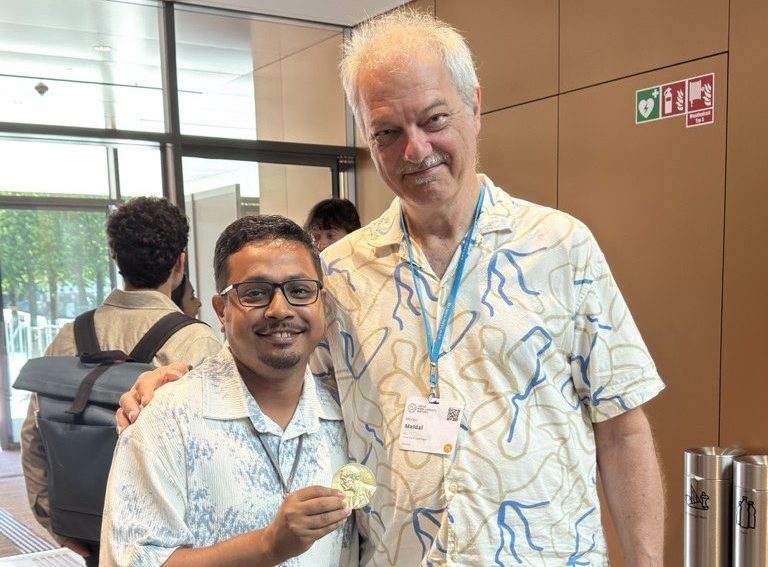
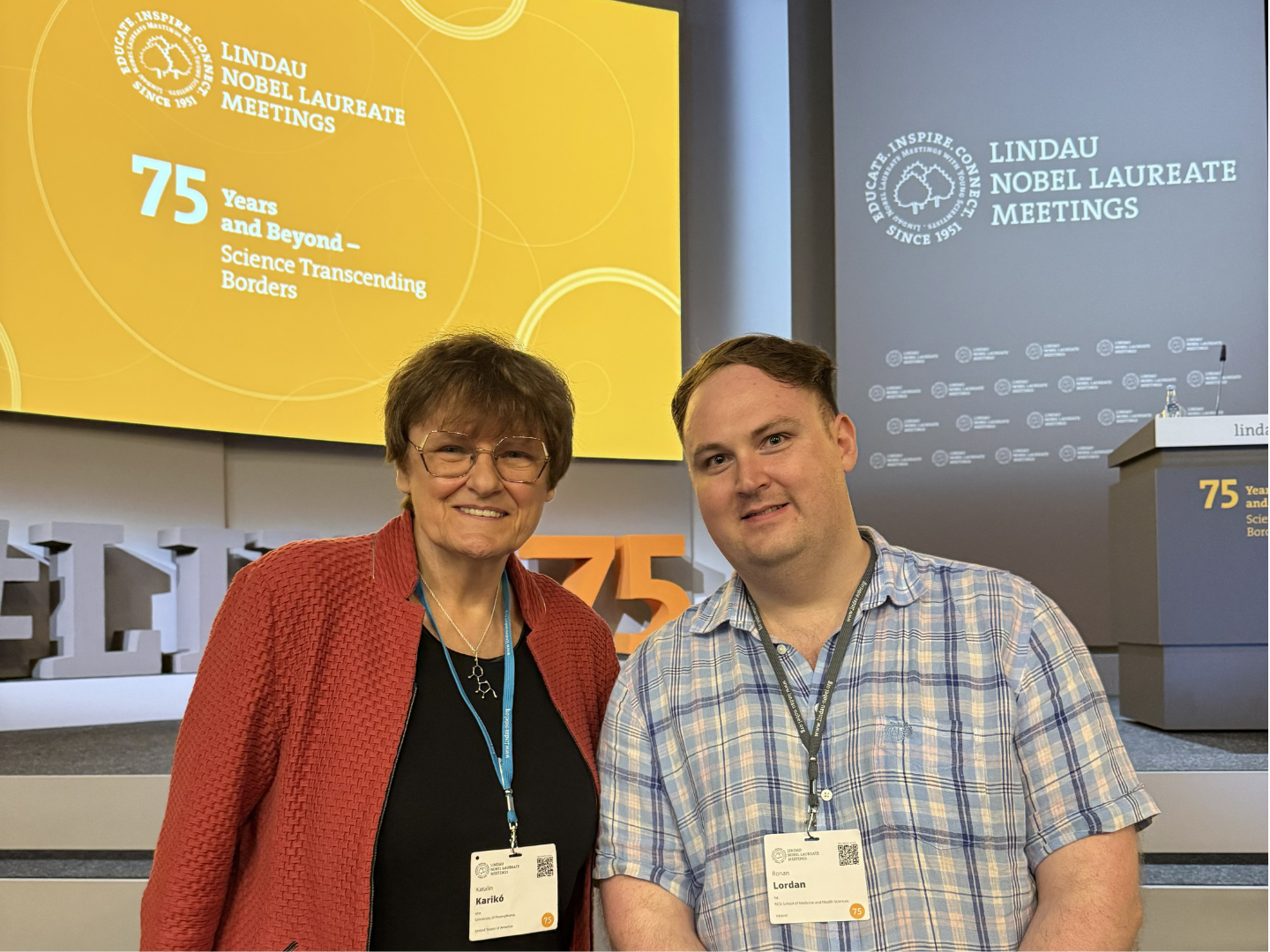
The programme for the 75th Lindau Nobel Laureate Meeting was packed with opportunities to engage with Nobel Laureates and exceptional early-career researchers from around the world. One of the highlights for me was meeting Professor Katalin Karikó (2023 Nobel Prize in Physiology or Medicine) on several occasions throughout the week. She has inspired a generation of scientists through her resilience, determination, and unwavering belief in the value of discovery, despite years of setbacks and uncertainty. Her story is a powerful reminder to early-career researchers that perseverance is often just as important as talent. She was even kind enough to let several of us hold her Nobel Prize medal, I can confirm it is much heavier than it looks!
Beyond the meetings with Nobel Laureates, the programme also included a number of exclusive events that required separate competitive applications. I was fortunate to be selected for several of these. One particularly memorable discussion was with former German Chancellor Angela Merkel, who met with a small group of young scientists to hear our perspectives on academic freedom and the role of researchers in informing public policy and helping societies navigate increasingly complex global challenges. It was encouraging to see someone with such extensive political experience genuinely interested in the views of early-career researchers.
I was also selected to participate in the Breaking Barriers in Science Workshop, hosted by Lindau Alumni and the Chief Scientific Officer for Nobel Prize Outreach, Adam Smith. The workshop brought together early-career researchers to explore the causes of career precarity, barriers to visibility and progression, and potential solutions. Working collaboratively, we developed practical recommendations that the Lindau Foundation will continue to refine and, where possible, implement over the coming year. It was inspiring to contribute to discussions focused not only on advancing science, but also on improving the culture and sustainability of scientific careers.
On several occasions over coffee and dinner, I had the opportunity to speak with Professor Martin Chalfie, who received the Nobel Prize in Chemistry for the development and application of green fluorescent protein (GFP). While I was fascinated by our discussions about his current scientific research, I was equally impressed by his enthusiasm for mentorship and teaching. It was refreshing to hear about the enjoyment he finds in educating students and his innovative use of artificial intelligence to support formative assessment. He also shared stories about receiving the Nobel Prize and offered a glimpse into the humour, camaraderie, and friendships that exist among Nobel Laureates.
I was equally impressed by the openness and calibre of scientific discussion during conversations with James Rothman (2013 Nobel Prize in Physiology or Medicine) alongside several other young scientists during the Nobel Hours. He discussed his work on the biology of extracellular vesicles in the brain and his pioneering studies of SNARE proteins. Professor Rothman welcomed our questions and clearly enjoyed the lively scientific debate. I suspect many of us left inspired to take a much closer look at extracellular vesicle signalling in our own research.
With more than 70 Nobel Laureates in attendance, it didn’t take long to meet one. In fact, within a minute of entering the conference hall I found myself chatting with Walter Gilbert while queuing for coffee. His pioneering work on DNA sequencing, which earned him the 1980 Nobel Prize in Chemistry, helped lay the foundations for modern genomics.
Although all of the Laureates were remarkably approachable, several were especially generous with their time. For example, I enjoyed several conversations with Morten Meldal (2022 Nobel Prize in Chemistry), who was as engaging on the dance floor, joining young scientists in singing along to Nirvana, as he was when discussing chemistry. During the boat trip across Lake Constance to the beautiful Mainau Island and home to Countess Bettina Bernadotte (Lindau Foundation), I also had a fascinating conversation with Craig Mello (2006 Nobel Prize in Physiology or Medicine) about the future of genetics, RNA interference, and how artificial intelligence might shape biomedical research. Equally memorable were conversations with David Gross, Omar Yaghi, Fred Ramsdell, and Ben Feringa. These interactions highlighted what makes Lindau so special: world-leading scientists who are genuinely interested in engaging with the next generation of researchers as colleagues rather than simply as an audience.
One of the aspects I was most looking forward to was meeting the more than 600 early-career researchers from around the world. Many of today’s scientific challenges require interdisciplinary and international collaboration, so exchanging ideas with researchers from different backgrounds was an invaluable experience. Throughout the week I learned from their perspectives, shared my own experiences, and developed connections that I am confident will lead to future collaborations through Lindau’s remarkable Alumni network. Over countless conversations, coffees, and the occasional pint, I am equally confident that many lifelong friendships were formed.
The Lindau Nobel Laureate Meeting is unlike any other scientific conference. It brings together more than 600 early-career researchers with over 70 Nobel Laureates in an environment specifically designed to encourage conversation, curiosity, and collaboration. Rather than simply inviting young researchers to observe, Lindau empowers them to actively shape the programme, contribute to panel discussions, and engage directly with some of the world’s most influential scientists.
Lindau is a truly unique forum for connecting continents, disciplines, and generations of researchers. It provides the opportunity to build bridges across borders and to tackle some of society’s greatest challenges, from ageing populations and climate change to global health and emerging technologies. Listening to scientists from every continent broadened my perspective and reinforced the importance of diversity, openness, and international collaboration in research. As was said during the closing ceremony on Mainau Island, “the world is waiting for us to change it.” I left Lindau inspired, energised, and optimistic about the future of science, and deeply grateful to Research Ireland, the Lindau Nobel Laureate Meetings, and the DFG for making such an extraordinary experience possible.