National Gallery portraits retitled following Irish research
Art history expert uncovers new identities, putting names to Renaissance faces
Work by a Trinity College Dublin art historian, Dr Rachel Healy, has led to two Renaissance paintings in major national collections being formally retitled following new research into the identities of their sitters.
Dr Healy work focuses on Renaissance Venice and portraits of the Cornaro family. Her research began during her PhD at University College Dublin, then funded through the Irish Research Council Government of Ireland Postgraduate Scholarship programme and has continued through her Research Ireland-funded Postdoctoral Fellowship at Trinity College Dublin.
One of the central challenges of researching Renaissance portraits is that paintings can survive while the identities of the people depicted are lost. Healy’s research combines close visual analysis with archival research, provenance evidence and comparisons with other portraits to establish the identities of previously unidentified sitters.
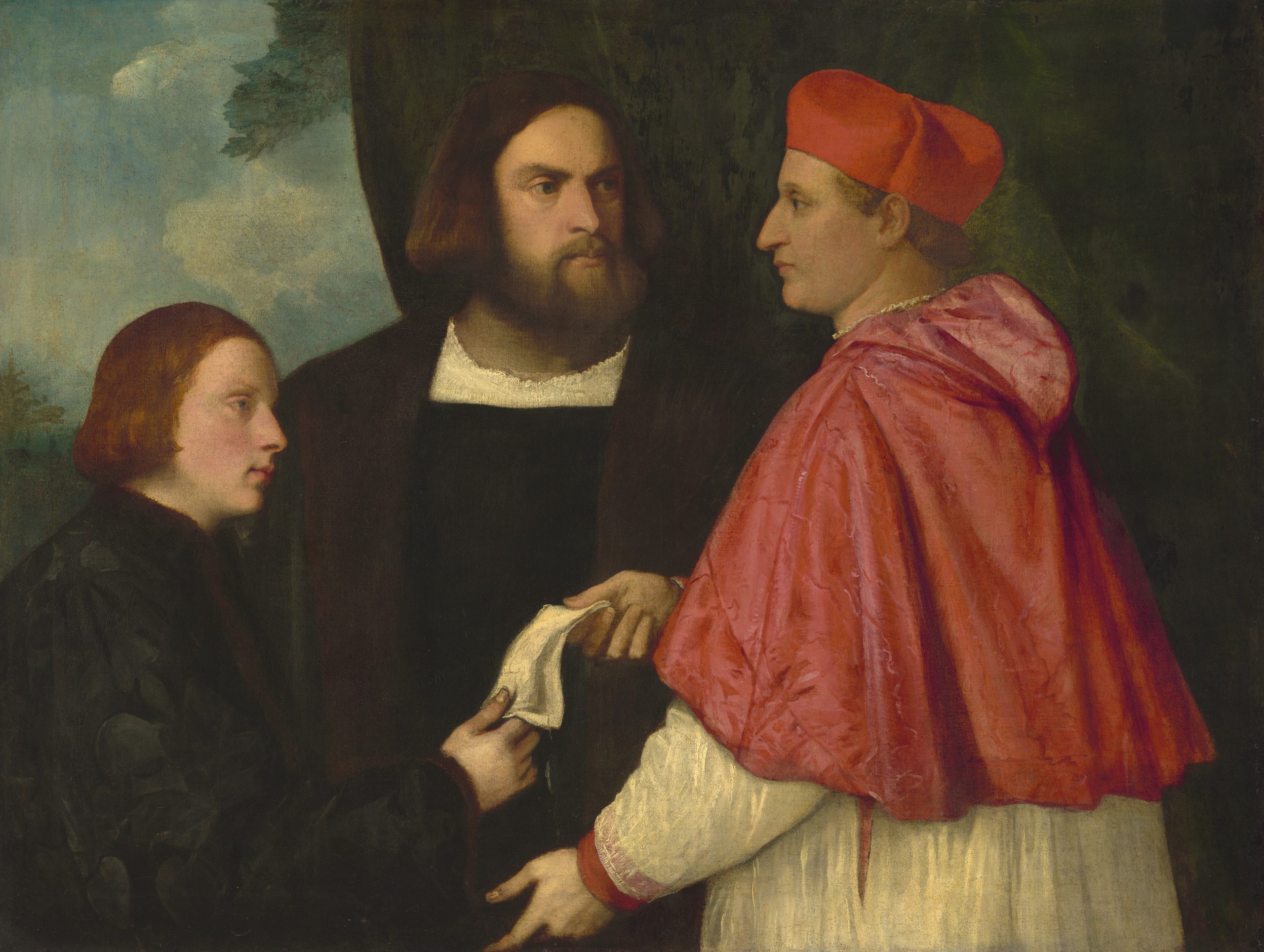
An important source for this work is a seventeenth-century painted Cornaro family tree by the Venetian artist Antonio Zanchi, which depicts members of the family. During her doctoral research, Healy used the family tree alongside other evidence to identify the figures in an anonymous double portrait in the National Gallery of Ireland.
The painting had long been known simply as Portrait of Two Venetian Gentlemen (fig.1). Healy’s research argued that the figures were Giorgio Cornaro, a Knight of the Golden Stole and prominent member of the patrician family, the Cornaro, and his son, Cardinal Francesco Cornaro. Following the publication of her research, the National Gallery of Ireland formally changed the title of the painting in its collection to Portrait of Giorgio Cornaro and His Son, Cardinal Francesco.
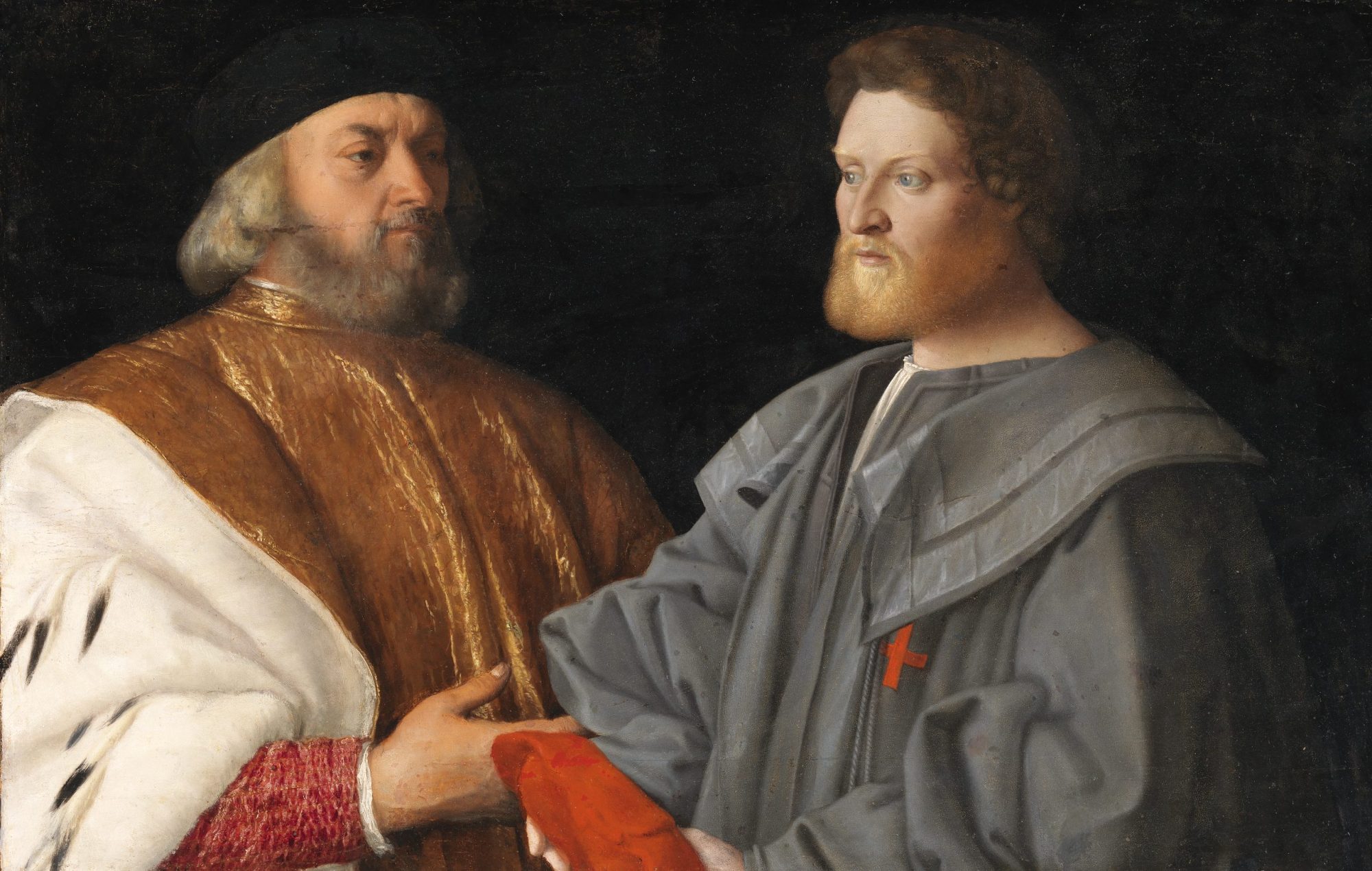
Her research has also resulted in a second formal retitling. A Renaissance painting in the National Gallery of Art in Washington DC, previously identified as Girolamo and Cardinal Marco Corner Investing Marco, Abbot of Carrara, with His Benefice (fig.2), was reassessed by Healy through archival and visual research. Her findings identified the figures as Giacomo and Cardinal Marco Corner investing Andrea, Abbot of San Zeno, with his benefice. Following the publication of her research in Renaissance Studies, the National Gallery of Art formally changed the title in its collection to reflect the new identification.
The Research Ireland Postdoctoral Fellowship has allowed Healy to extend this research programme further. During the fellowship, she has published five articles on the Cornaro family and Venetian portraiture, with additional work forthcoming, including a monograph with Routledge, Art Patronage and the Cornaro Family in Renaissance Venice: Wealth, Power and Dynastic Strategy.
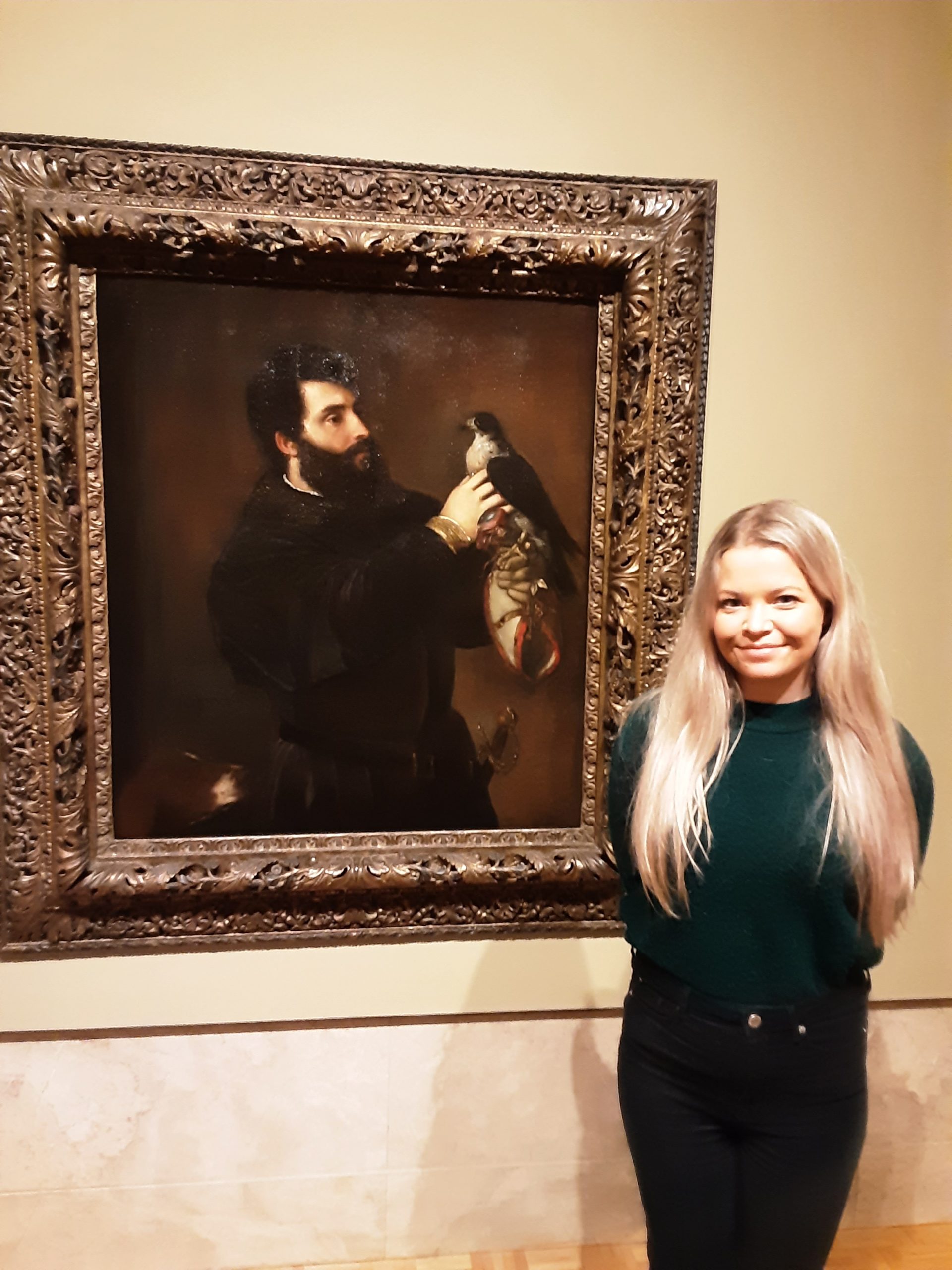
Her most recent research, published in Renaissance Studies in July 2026, examines Titian’s Falconer in the Joslyn Art Museum. The painting had previously been associated with Zorzone Cornaro. Healy’s research proposes that the sitter may instead be Girolamo Cornaro and argues for an earlier date in the 1520s. The research brings together evidence concerning Girolamo’s activities as a falcon trader, his connection with Titian, his likely age and his physical appearance.
From identifying individuals whose names had been lost to reassessing established museum attributions, Healy’s research demonstrates how new archival and visual evidence can change our understanding of works of art already held in major collections. It also illustrates the continuing impact of research supported through Research Ireland, enabling discoveries made during doctoral research to develop into new scholarship and, ultimately, changes to the way works of art are identified and presented to the public.
Photo Captions:
Fig.1 Unknown artists, Giorgio Cornaro (1452-1527) and his Son Francesco Cornaro (1478-1543), c.1520-1530 and c.1510-1520, oil on wood panel, 63 × 98 cm, National Gallery of Ireland, Dublin. Courtesy National Gallery of Ireland.
Fig.2 Titian and Assistant, Giacomo and Cardinal Marco, investing Andrea, Abbot of San Zeno, with his Benefice, c.1524, oil on canvas, 99.8 × 132.1 cm, National Gallery of Art, Washington D.C. Timken Collection. Courtesy National Gallery of Art, Washington.
Fig.3 Dr Healy with Titian’s Portrait of a Man of the Cornaro Family with a Falcon, late 1520s, oil on canvas, 108.6 × 96.5 cm, Joslyn Art Museum, Omaha, Nebraska.