Spotlight on US-Ireland R&D Partnership funding
A joint funding investment of over €8.3m million has been allocated to six projects through the latest round of the US-Ireland R&D Partnership Programme.
This tripartite research and development (R&D) partnership between the United States of America (USA), Republic of Ireland (RoI) and Northern Ireland (NI) increases collaborations among researchers and industry across the three jurisdictions.
The six projects span 10 higher education institutions in the three jurisdictions, and include research on laser-aided manufacturing, biodegradable polymers, telecommunications and food processing impacts on diets and heart health.
Since its launch in 2006, the US-Ireland R&D Partnership has funded 106 partnership projects with a combined government investment in excess of €150 million. This unique funding initiative aims to increase the level of collaborative R&D, generating valuable discoveries and innovations.
The funding agencies involved in this latest round are Research Ireland and the Health Research Board (HRB) in RoI, the Department for the Economy (DfE) and the Health & Social Care R&D Division (HSC R&D) in NI, and the National Science Foundation (NSF) and the National Institutes of Health (NIH) in USA.
The 10 collaborating institutions are: University of Galway, Trinity College Dublin, University College Dublin and Tyndall National Institute in the Republic of Ireland; Queen’s University Belfast in Northern Ireland; and University of Utah, University of California Riverside, University of Florida, Michigan State University and Harvard University in the USA.
Projects titles and award details:

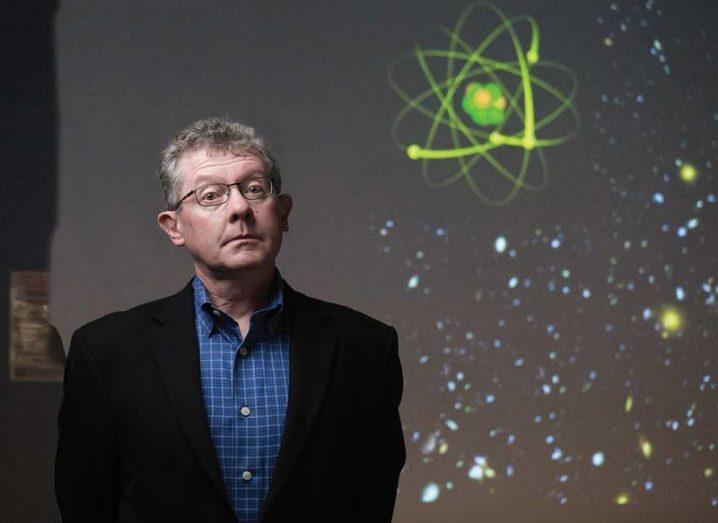
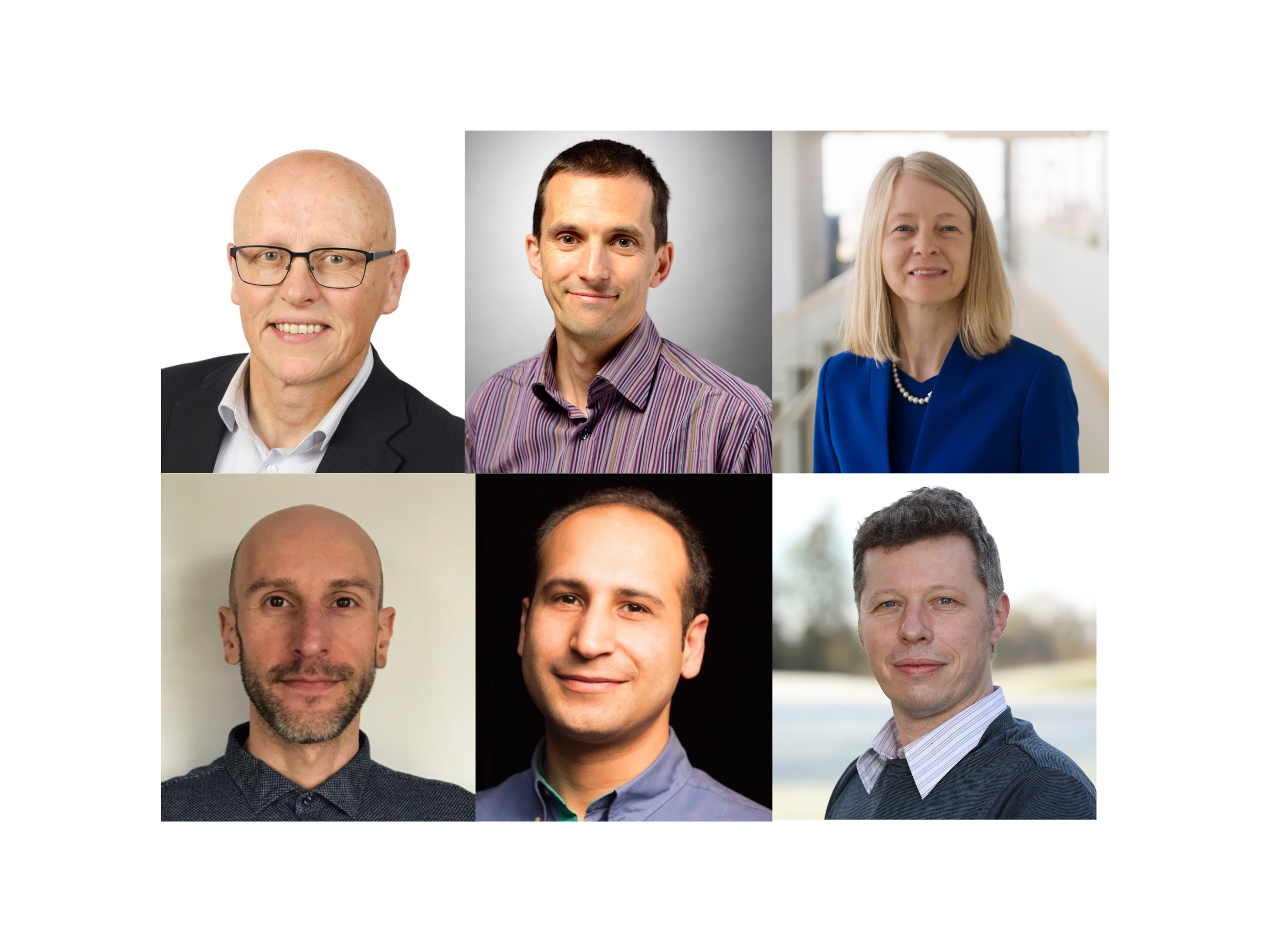
Professor Gerard O’Connor, University of Galway
STELLAR: Scalable low temperature ultrafast laser materials manufacturing
Lead Applicant: Prof. Gerard O’Connor
Co-applicants: Dr Hamza Shakeel & Dr Berardi Sensale-Rodriguez
Lead RoI Institution: University of Galway
Value of Award:
RoI: €446,945
NI: £299,821
US: $602,638
Partner Institutions: Queen’s University Belfast and University of Utah
Lay abstract: STELLAR aims to pioneer a new approach to ultrafast laser processing technology that enables precise, low-temperature processing of glass materials. The project aims to reshape laser beams to carefully control how energy is delivered, allowing films less than 100 nanometres thick – around 1,000 times thinner than a human hair – to be deposited, without causing heat damage. This approach has the potential create an entirely new class of laser-manufactured sensors and devices for healthcare, microelectronics, and beyond.
Security and Privacy implications of unused parameters of ML Models: Theoretical Foundations and Empirical Evaluations
Lead Applicant: Dr Alessio Benavoli
Co-applicants: Dr Ihsen Alouani and Prof. Nael Abu Ghazaleh
Lead RoI Institution: Trinity College Dublin
Value of Award:
RoI: €326,843
NI: £267,125
US: $500,000
Partner Institutions: Queen’s University Belfast and University of California Riverside
Lay abstract: This project will investigate hidden security and privacy risks in modern machine learning (ML) systems. As AI models grow in size and complexity, they often contain excess capacity beyond what is needed for their core tasks. The researchers will explore how this unused capacity could be exploited and used to covertly store or leak sensitive information, with the end goal of developing new safeguards against exploitation to ensure any current and future ML models are secure and trustworthy.

Dr Alessio Benavoli, Trinity College Dublin

Professor Kevin O’Connor, University College Dublin
Production-Application-Environmental Impact of Biodegradable Polymers Based on Polyhydroxyalkanoates
Lead Applicant: Prof. Kevin O’Connor
Co-applicants: Prof. John Wendell McGrath and Dr Jeffrey Bates
Lead RoI Institution: University College Dublin
Value of Award:
RoI: €454,651
NI: £299,852
US: $537,639
Partner Institutions: Queen’s University Belfast and University of Utah
Lay abstract: This project aims to understand the fate of microplastics generated from biodegradable plastics. Around 400 million tonnes of plastic waste are produced globally each year, much of which persists in the environment for centuries as it fragments into microplastics. While biodegradable plastics are increasingly proposed as a solution, their long-term environmental behaviour is poorly understood. This research will examine how material design and degradation influence microplastic formation, helping to inform the development of genuinely sustainable plastic alternatives that reduce long-term environmental harm.
INtegrated Sensing and Telecommunications for INtelligent Connection and Transmission (INSTINCT)
Lead Applicant: Dr Arman Farhang
Co-applicants: Dr Dmitry Zelenchuk and Dr Rong-Rong Chen
Lead RoI Institution: Trinity College Dublin
Value of Award:
RoI: €452,682
NI: £299,875
US: $449,999
Partner Institutions: Queen’s University Belfast, University of Utah, University of Florida
Lay abstract: INSTINCT aims to tackle the growing demand for smarter and more efficient wireless systems by bringing sensing and communication together into a single wireless framework, significantly enhancing efficiency, cost-effectiveness, and performance. By sharing spectrum, power, and hardware, INSTINCT makes better use of limited radio resources while reducing interference and infrastructure costs. The project will develop advanced signal processing, reconfigurable radio hardware and machine learning techniques to enable real-time adaptation, even in complex and crowded wireless environments. This will lead to more reliable and responsive connectivity, supporting future technologies such as smart cities, connected devices and autonomous transport.
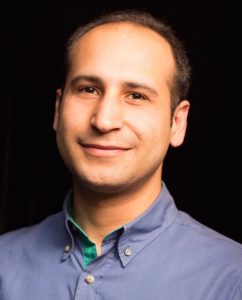
Dr Arman Farhang, Trinity College Dublin

Professor Lorraine Brennan, University College Dublin
Ultra-processed Foods, Diet Quality, and Cardiometabolic Health: An Inter-disciplinary TransAtlantic Collaborative Project
Lead Applicant: Prof. Lorraine Brennan
Co-applicants: Prof. Jayne Woodside and Dr Qi Sun
Lead RoI Institution: University College Dublin
Value of Award:
RoI: €900,230
NI: £530,470
US: $843,047
Partner Institutions: Queen’s University Belfast and Harvard University
Lay abstract: This project will examine how ultra-processed foods (UPFs) affect heart health. While UPFs make up a large part of modern diets, particularly in the United States, not all UPFs may have the same impact on health. The researchers will compare different UPFs within healthy dietary patterns to better understand their effects on human health. The findings are anticipated to strengthen the evidence base for dietary guidelines and help inform more effective public health policies.
MAARS: Multi-Bessel Antenna systems for Angle-Range Spatial multiplexing
Lead Applicant: Dr Senad Bulja
Co-applicants: Dr Vishal Sharma and Prof. Mauro Ettorre
Lead RoI Institution: Tyndall National Institute
Value of Award:
RoI: €451,836
NI: £300,000
US: $600,000
Partner Institutions: Queen’s University Belfast and Michigan State University
Lay abstract: MAARS aims to make wireless communication more secure, efficient and reliable by creating location-specific communication ‘pockets’. Instead of signals spreading widely and being vulnerable to interference or interception, the project will develop approaches using antennas that confine wireless information precisely defined areas where it is needed. This work will support improved privacy for connected devices in homes, cities and networks, as well as across next-generation 5G and 6G networks.

Dr Senad Bulja, Tyndall National Institute
For more information about the US-Ireland R&D Partnership Programme, please visit the programme webpage.