Transforming the Diagnosis and Care of Children with Neurogenetic Conditions
The CINDI registry is building a national data resource and helping families find answers through genomics.
If there is an answer anywhere for my sons, it lies in further investigation and research. I have wished so hard over time to have our boys’ cases looked at in-depth for a connecting genetic issue that may lead to a less trial-and-error approach and more towards precision therapy. We know we may never have a definitive answer regarding their diagnoses, but without this golden opportunity, we would never know either way.
– A family member sharing their experience with CINDI
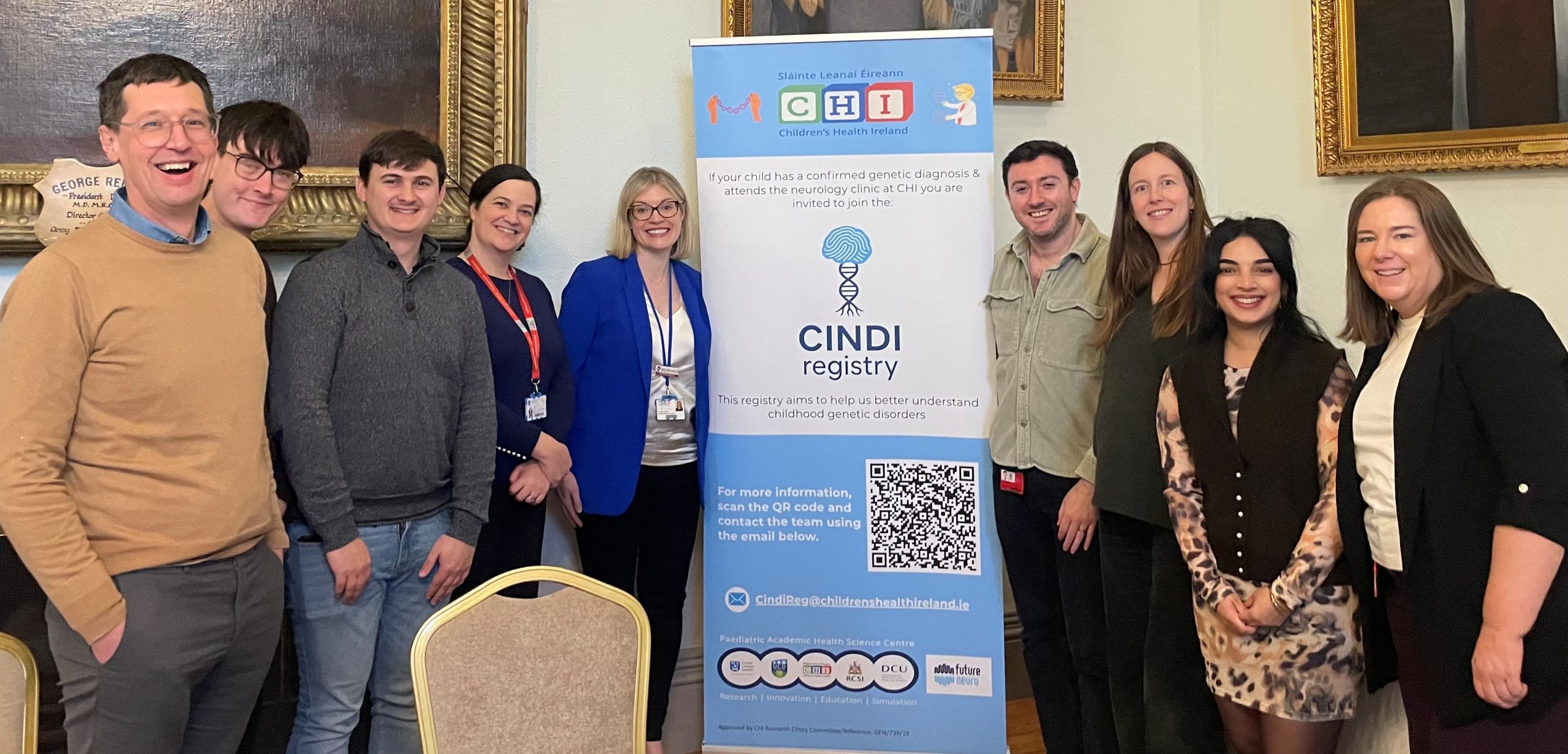
For many families affected by rare and complex neurogenetic conditions, time and uncertainty can have lifelong consequences. Hospital appointments, tests and unanswered questions become part of everyday life. FutureNeuro, the Research Ireland Centre for Translational Brain Science, is building national patient registries to transform how neurological conditions are diagnosed, understood and treated. One such initiative is the Collaboration in Genomic Disorders in Ireland (CINDI) registry, which is focused on children and young people with neurogenetic conditions.
CINDI was established in 2023 by Dr Susan Byrne, FutureNeuro Clinical Researcher at RCSI University of Medicine and Health Sciences and paediatric neurologist at Children’s Health Ireland (CHI), in collaboration with Dr Janna Kenny, Clinical Geneticist at CHI. The initiative is funded by the Children’s Health Foundation through the CHI Seed Funding Programme, alongside support from FutureNeuro.
Since its launch, over 100 children and young people have joined the CINDI registry, and the impacts for families are already taking shape. Data captured through the registry show that 14 participating children have accessed precision-based therapies as part of their clinical care. In addition, five participants have been identified as candidates for clinical trials, while two have joined additional research studies related to their conditions. These insights demonstrate how structured clinical and genomic data can help connect patients with research opportunities and deepen understanding of rare neurogenetic disorders.
For families who have spent years searching for answers, CINDI has opened up new pathways for investigation previously unavailable through standard clinical care. Many more participants have undergone advanced genetic tests or reanalysis through research pathways, helping to identify new diagnostic leads, and bringing families closer to understanding and managing their child’s condition. The impacts of the CINDI registry extend far beyond the 100+ children and their families. The secure, ‘silo’-style registry allows multiple research groups to access the data, while maintaining data governance and security. This infrastructure is strengthening Ireland’s capacity for national and international collaboration on rare diseases, and allowing Irish families to contribute to and benefit from research advancements through the European rare diseases network.
Looking forward, FutureNeuro will continue to expand CINDI and strengthen its international integration. For undiagnosed patients, a multi-omics approach, combining genomic, transcriptomic and emerging technologies such as long-read sequencing will be central. The CINDI registry is living proof of how focused support for high-quality data infrastructure can translate directly into a more resilient health research ecosystem, resulting in better health outcomes for the Irish public.
Who is involved?
FutureNeuro, the Research Ireland Centre for Translational Brain Science, RCSI University of Medicine and Health Sciences, Children’s Health Ireland, Children’s Health Foundation, European Rare Disease Network.
Find out more:
FutureNeuroFutureNeuro CINDI registryCINDI registry
Full image caption: Members of the FutureNeuro and Children’s Health Ireland teams involved in the CINDI registry. Pictured (left to right): Prof. Gianpiero Cavalleri, Fergal Dolan, Aiden Beegan, Dr Janna Kenny, Dr Susan Byrne, Dr John Coleman, Sarah Conroy, Tanya Mohile and Denise Fahy.