€36.3m investment in early-career researchers to deliver societal and economic impact

New cancer treatments, sustainable food innovations and social narratives in Irish film and television among the Research Ireland-funded projects.
Minister for Further and Higher Education, Research, Innovation and Science, James Lawless TD, today announced €36.3 million in funding for 341 research projects through the Research Ireland Government of Ireland postgraduate and postdoctoral programmes.
Announcing the awards, Minister Lawless said:
This significant investment of €36.3 million in our early career researchers reinforces the Government’s commitment to the future of Ireland’s research and innovation system. The Government of Ireland programme is a central measure in supporting the system’s continued development and in strengthening Ireland’s international competitiveness. Early career researchers are the lifeblood of that system. These awards, which span a wide range of subject areas, represent an investment in the country’s future capacity to innovate, driving both social and economic benefits. Without new ideas and new ways of thinking, we cannot hope to build or sustain Ireland as a knowledge economy. My congratulations to all the awardees. I look forward to seeing the impact of your work – on society, on your careers, and in further enhancing Ireland’s reputation as an innovation economy.
The Government of Ireland programme will support 244 postgraduate scholars and 97 postdoctoral fellows across 16 higher education institutions and research performing organisations.
Welcoming the announcement, Dr Diarmuid O’Brien, CEO of Research Ireland, commented:
At the heart of these programmes are the researchers themselves – individuals whose creativity and determination are shaping new ideas and advancing knowledge across all disciplines. This year’s awardees have demonstrated exceptional potential, bringing forward ambitious ideas and fresh perspectives that will enrich Ireland’s research community. Research Ireland is proud to support their development and to provide an environment in which their talent can thrive. Theirs is the curiosity, skill and dedication that will shape the breakthroughs of tomorrow. We are excited to see where their endeavours lead.
Some of the Government of Ireland Postgraduate Scholarship Programme awardees include:
- Rose Ugoalah (Technological University Dublin), will explore the role of screenwriters, directors, and producers from underrepresented groups in shaping social narratives in Irish film and television from 1990 to 2025.
- Ella Shanley (Trinity College Dublin), will use advanced 3D imaging to reveal how the structure of battery electrodes affects charging speed, supporting the design of faster charging, high-performance electric vehicle batteries.
- Sacha Wood (University of Galway) will analyse how humour can be used to challenge old, fixed ideas about Irish language and [Northern] Irish identity through the lens of the Irish language film ‘KNEECAP’.
- Anthony Mullen (University of Limerick) will develop safer, more energy-efficient micro-LEDs by replacing toxic cadmium-based nanocrystals with non-toxic, brighter alternatives.
- Triona Kenny (Maynooth University) will examine how victims of a crime in Ireland can be harmed again through their dealings with the justice system, and will develop ways to make these processes more supportive and less traumatic.
- Eavan Pakenham (RCSI University of Medicine and Health Sciences) will create a dual-action bone-like material enriched with bioactive elements to both kill prostate cancer cells and support healthy bone regrowth.
- Sylwia O’Rourke (South East Technological University) will explore how digital technologies are used in early childhood education, and how these digital interactions shape young children’s learning and social development.
- Mohamed Elkhashab (University College Cork) will develop a new microneedle system to deliver skin-cancer drugs directly into the skin, offering a safer, less invasive alternative to surgery and systemic medications for basal cell carcinoma.
Some of the Government of Ireland Postdoctoral Fellowship Programme awardees include:
- Dr Inés Calvete de la Torre (Teagasc) will work on transforming leftover fruit from harvests into a nutritious fermented drink, using sustainable bioprocessing to cut food waste while creating a healthy alternative to sugary soft drinks.
- Dr Holly O’Farrell (Dún Laoghaire Institute of Art, Design and Technology) will explore how European women used photography in British-Mandate Palestine and Transjordan to document daily life and navigate the power structures of the time, revealing women’s hidden influence on history.
- Dr Conor Thornberry (Trinity College Dublin) will use a virtual navigation game and advanced brain imaging to uncover how ageing affects the brain’s navigation systems, helping to spot early signs of Alzheimer’s disease and dementia, and support new tools for keeping the brain healthier for longer.
- Dr Raju Lipin (University of Limerick) will use computational techniques to design cheaper, more efficient catalysts for producing clean hydrogen, helping to replace expensive precious metals like platinum, and supporting the shift to sustainable energy.
Thirteen of this year’s postgraduate awardees are co-funded by partner agencies – the Environmental Protection Agency; Department of Children, Disability and Equality; Met Éireann; and Irish Aid/Department of Foreign Affairs and Trade.
Some examples of awardees supported by our strategic partners include:
- Augustus Sobeng, from Mary Immaculate College and supported by the Environmental Protection Agency, will explore how non-Western perspectives and community practices in the Global South can inform more inclusive and sustainable approaches to the circular economy.
- Sofiya Volvakova, from University College Dublin and supported by the Department of Children, Disability and Equality, will compare how schools in the UK and Ireland use punitive measures, examining which children are most affected and how these practices shape their experience of education.
- Saoirse Fordham, from Maynooth University and supported by Met Éireann, will use advanced climate modelling techniques to help improve flood-risk planning and strengthen national flood resilience in the context of climate change.
- Rudine Jakupi, from Dublin City University and supported by Irish Aid, will examine how NATO’s gender-equality commitments are adopted in Kosovo’s security sector, exploring why progress is uneven and how local resistance can drive real change.
Full institutional spread of awardees: Atlantic Technological University (4 PG), Dublin City University (27 PG, 5 PD), Dun Laoghaire Institute of Art, Design and Technology (1 PD), Mary Immaculate College (4 PG, 1 PD), Maynooth University (16 PG, 2 PD), Munster Technological University (1 PD), RCSI University of Medicine and Health Sciences (7 PG, 3 PD), South East Technological University (6 PG), Teagasc (1 PD), Technological University Dublin (4 PG), Technological University of the Shannon (1 PG), Trinity College Dublin (44 PG, 32 PD), University College Cork (26 PG, 13 PD), University College Dublin (45 PG, 25 PD), University of Galway (36 PG, 8 PD), University of Limerick (24 PG, 5 PD).
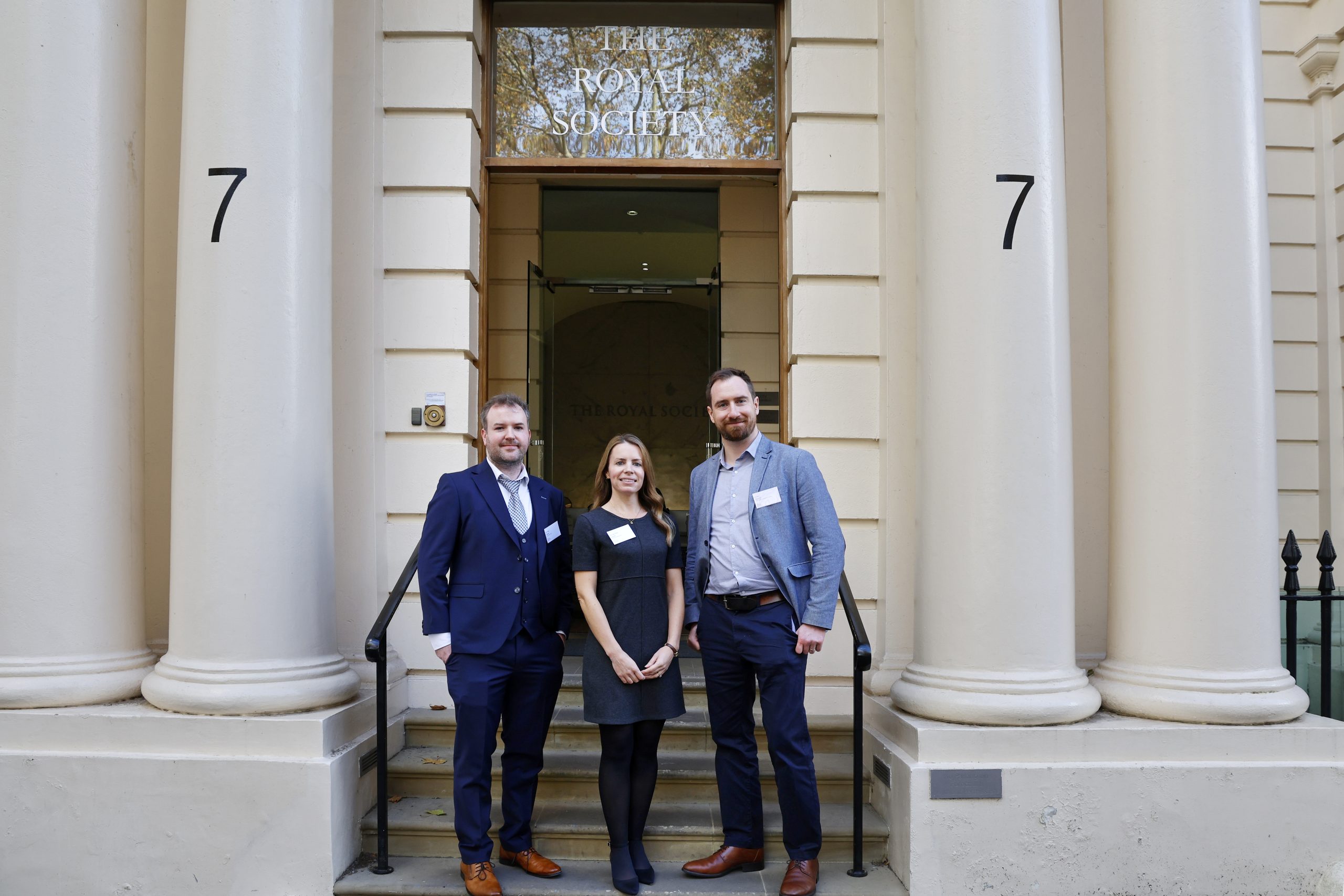
Image caption: Among the awardees under today’s Research Ireland Government of Ireland funding announcement are Rose Ugoalah (Technological University Dublin), who will explore the role of screenwriters, directors, and producers from underrepresented groups in shaping social narratives in Irish film and television from 1990 to 2025. (Photography: Al Higgins)