Government of Ireland: Past awardee spotlight
Dr Eimear Lagan – Government of Ireland Postgraduate Scholar – 2021
Childhood Brain Cancer Research
Dr Eimear Lagan, a former recipient of a Government of Ireland Postgraduate Scholarship from the Irish Research Council (now Research Ireland), has played a central role in a major international breakthrough in childhood brain cancer research.
Dr Lagan was a lead researcher on a landmark study that has identified a critical molecular process driving Diffuse Midline Glioma (DMG) — a rare and aggressive form of childhood brain cancer that is currently incurable. Published in the leading international journal Molecular Cell, the research offers a promising new direction for the development of targeted therapies for this devastating disease.
During her doctoral studies at Trinity College Dublin, Dr Lagan worked in the Bracken Lab at the Smurfit Institute of Genetics, where her research focused on understanding how cancer cells hijack the gene‑control machinery of the cell to sustain tumour growth. Supported by former IRC postgraduate funding, her work combined advanced genetic screening techniques with cutting‑edge molecular biology to investigate the role of gene‑silencing complexes in DMG.
The study revealed that, contrary to long‑held assumptions, DMG tumours remain dependent on a small but highly specific gene‑repressing complex known as CBX4/PCGF4‑cPRC1. Although this complex accounts for less than 5% of the gene‑silencing machinery in these cancer cells, the research demonstrated that it is essential for tumour survival. Crucially, this discovery identifies CBX4 as a highly promising and precise therapeutic target, opening the door to treatments that could disrupt tumour growth while minimising damage to healthy tissue.
Dr Lagan completed her PhD under the joint supervision of Professor Adrian Bracken at Trinity College Dublin and Dr Gerard Brien at the University of Edinburgh, conducting her final research abroad as part of an international collaboration. Alongside fellow former PhD researcher Dr Daire Gannon, her work exemplifies the impact that early‑career researchers can have when supported through sustained investment in postgraduate research.
Dr Lagan is currently a postdoctoral researcher at the University of Edinburgh.
Dr Sarah Larragy – Government of Ireland Postgraduate Scholar – 2018
Genetic Diversity of Key Pollinator in Ireland
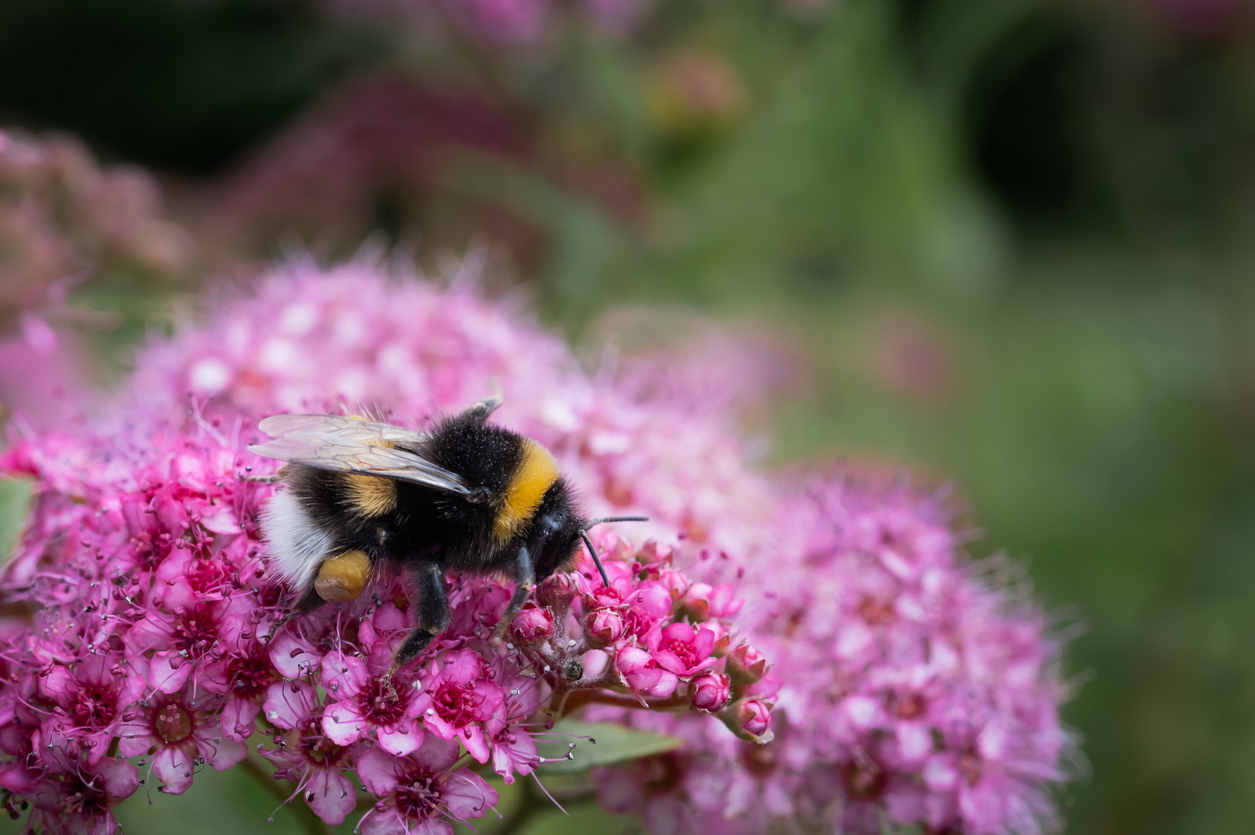
Research led by Dr. Sarah Larragy, a former Irish Research Council (IRC)‑funded postgraduate scholar, has revealed important new insights into the genetic diversity of one of Ireland’s most familiar pollinators, the buff‑tailed bumblebee (Bombus terrestris audax).
Conducted during Dr. Larragy’s PhD at Maynooth University, where she was supervised by Dr James Carolan (Maynooth University), Prof Jane Stout (Trinity College Dublin) and Dr Joe Colgan (Johannes Gutenberg University Mainz, Germany), this IRC (now Research Ireland)‑supported research used whole‑genome resequencing to compare Irish and British bumblebee populations. The study – recently published in Evolutionary Applications – found clear, genome‑wide differences between the two, demonstrating that Irish populations are genetically distinct from their British counterparts, despite being classified as the same subspecies.
Significantly, differences were identified in genes linked to nervous system development, suggesting that Irish and British populations may have adapted differently to environmental pressures. The research also showed that commercially bred bumblebees, widely used in agriculture, are genetically closer to British populations than to Irish wild bees. These findings have important implications for pollinator conservation, agricultural practice, and biosecurity-related policy. By demonstrating the genetic distinctiveness of Irish populations, this research highlights the need to manage commercial pollinator imports and mitigating risks they may pose to native and potentially locally-adapted pollinator populations.
During her PhD, Dr Larragy also collaborated with the National Biodiversity Data Centre (NBDC) on creating guidelines for users of commercial pollinators to inform them of risks associated with imported colonies as well as provide practical advice aimed at mitigating these risks. Dr Larragy’s research has also contributed to national science communication efforts, including participation in RTÉ’s “Ten Things to Know About… Biodiversity”, helping to bring pollinator research to a public audience.
Dr. Larragy’s work exemplifies just one of many examples of the impact of investment in postgraduate research, supporting high‑quality science with clear relevance to agricultural sustainability and biodiversity conservation in Ireland.
Dr Larragy is now working as a post-doctoral researcher in Trinity College Dublin with Prof Jane Stout on an interdisciplinary Horizon-Europe funded project called RestPoll, which is using a stakeholder-driven approach to strengthen understanding of and create tools to facilitate pollinator conservation (see update on most recent workshop here). She also continues to participate and contribute to the Irish Pollinator Research Network.
Read Sarah's article for RTÉ BrainstormRead Sarah's article for RTÉ Brainstorm
Dr Sarpong Hammond Antwi – Government of Ireland Postdoctoral Fellow – 2023
Advancing Sustainable Water Governance
Research Ireland funding has played a key role in supporting the early‑career development and research impact of Dr Sarpong Hammond Antwi, a postdoctoral researcher at Dundalk Institute of Technology (DkIT) working at the intersection of water governance, climate change, and sustainability.
Dr Sarpong completed his PhD at DkIT, where his research examined water governance and management practices in Ireland. Building on this work, he was awarded a former IRC Postdoctoral Fellowship, enabling him to continue and significantly expand his research agenda at a critical career stage.
His research focused on water resource governance transitions in Ireland, with particular emphasis on stakeholder engagement and policy implementation. Using an actor‑network analysis, the project examines how different stakeholders including policymakers, regulators, and communities influence water governance outcomes. The research aimed to develop a practical framework for integrated stakeholder engagement, supporting Ireland’s transition towards a more sustainable water future in the context of climate change and increasing pressure on water resources.
His research outputs have already informed water management strategies in Ireland, and Ghana, and have generated policy interest, particularly in relation to river basin management planning in Ireland. By explicitly linking research, policy, and practice, his work demonstrates how academic research can address complex societal and environmental challenges
Dr Sarpong’s research journey reflects the broader value of investment in early‑career researchers, providing the resources, stability, and international visibility needed to deliver policy‑relevant research with tangible societal benefits. His work illustrates how Research Ireland/former IRC‑supported research contributes to evidence‑based decision‑making, sustainable development, and long‑term environmental resilience, both in Ireland and internationally.
Dr Sarpong is now pursuing further postdoctoral research in DkIT.
Read about Sarpong's research on Silicon RepublicRead about Sarpong's research on Silicon Republic
Luke Gibbons – Government of Ireland Postgraduate Scholar – 2022
Environmental Governance
Research Ireland (former IRC) funding has played a central role in supporting the growing impact of Luke Gibbons, a Trinity College Dublin researcher whose work sits at the intersection of environmental education, law, and climate governance.
In 2024, Mr Gibbons was recognised internationally as one of the Top 30 Under 30 Environmental Educators in the World, the only awardee from the European Union, underscoring both his personal achievements and Ireland’s contribution to global climate education efforts.
Currently pursuing a PhD at Trinity College Dublin as a Government of Ireland Scholar, Luke’s research focuses on company directors’ duties in relation to climate change risks. His work addresses a critical and emerging area of climate governance, examining how corporate leadership and legal responsibility can influence business responses to climate change at a time of increasing regulatory and societal pressure.
Research Ireland support has enabled Mr Gibbons to develop this research at an early stage in his academic career, while also engaging internationally. As part of his research trajectory, he has served as a Fulbright Scholar and visiting researcher at Harvard Law School, further strengthening his global research network and enhancing the international visibility of Irish climate‑focused scholarship.
Beyond academia, Luke has demonstrated a strong commitment to public engagement and climate education, translating complex legal and environmental issues for broader audiences. His appointment as a Climate Reality Leader by former US Vice President Al Gore, along with his selection as one of the Top 40 Under 40 Irish in America, reflects the real‑world reach of his work and its influence beyond the university setting.
Luke has represented Ireland at the Global Peace Summit in New York, contributing to international dialogue on climate politics and education.