Transformative societal and economic impact the focus of €20m Research Ireland investment in 22 high-risk, high-reward projects
Supporting ambitious, curiosity-driven research with the potential for breakthrough discoveries across health, tech, and sustainability.
Minister for Further and Higher Education, Research, Innovation and Science, James Lawless TD, has announced funding of €20 million for 22 high-risk, high-reward research projects through the Research Ireland Frontiers for the Future Programme.
Minister Lawless said:
The 22 projects announced today under Research Ireland’s Frontiers for the Future Programme are ambitious in both scope and scale, spanning areas from pioneering cancer therapies to advancing a more sustainable and circular economy, and much more besides. The breadth of research being funded reflects the exceptional depth and diversity of talent across our research and innovation ecosystem. I congratulate all the awardees and wish them every success as they push the boundaries of knowledge and deliver meaningful innovation.
Welcoming the announcement, Dr Diarmuid O’Brien, CEO of Research Ireland, commented:
Curiosity-driven research funding is an essential part of a healthy, purposeful and forward-looking research ecosystem. Through the Frontiers for the Future Programme, Research Ireland supports researchers to take intellectual risks, and to pursue ideas that might not yet have a clear pathway, but could fundamentally reshape our understanding of the world around us. Supports like these are central to sustaining a vibrant and internationally competitive research environment, which is a core element of our recently launched strategy, ‘Curiosity. Capability. Competitiveness – Charting Ireland’s Research and Innovation Future.
Frontiers for the Future is a legacy programme inherited from Science Foundation Ireland (SFI), and has played an important role in supporting ambitious, curiosity-driven scientific research with the potential to deliver transformative societal and economic impact. As a new agency, Research Ireland is reimagining and redeveloping the legacy programmes inherited from both SFI and the Irish Research Council (IRC) to reflect its broadened remit and the full diversity of disciplines now supported, as set out in our recently published Programme Plan.
Research initiatives funded under the Frontiers for the Future programme enable independent investigators to pursue bold ideas and innovative research over a four- to five-year period. Research areas funded today range from advanced materials and road safety to antimicrobial resistance and cancer treatment, with this funding round supporting 16 medium-scale ‘projects’ and six larger scale ‘awards’.
The funding announced today represents the final Frontiers for the Future outcome for the ‘Projects’ stream of this programme. Future investigator-led funding of this scale is now being delivered through the Research Ireland Investigators Programme, which combines aspects of the former Frontiers for the Future ‘projects’ funding and IRC Laureate programme. The Investigators Programme will run annually, and is open to independent researchers across all disciplines.
Some highlights of funded Projects are:
- GlycoMetalGuard: Glycoconjugate metal complexes as targeted bacterial therapeutics and protective coatings suitable for medical devices (Dr Joseph Byrne, University College Dublin):
- Dr Byrne and his team are developing innovative antimicrobial coatings and therapies to prevent hospital-acquired infections stemming from medical devices. The research aims to target harmful bacteria with novel sugar-based metal compounds, supporting efforts to addressing antimicrobial resistance and improving patient safety and quality of life.
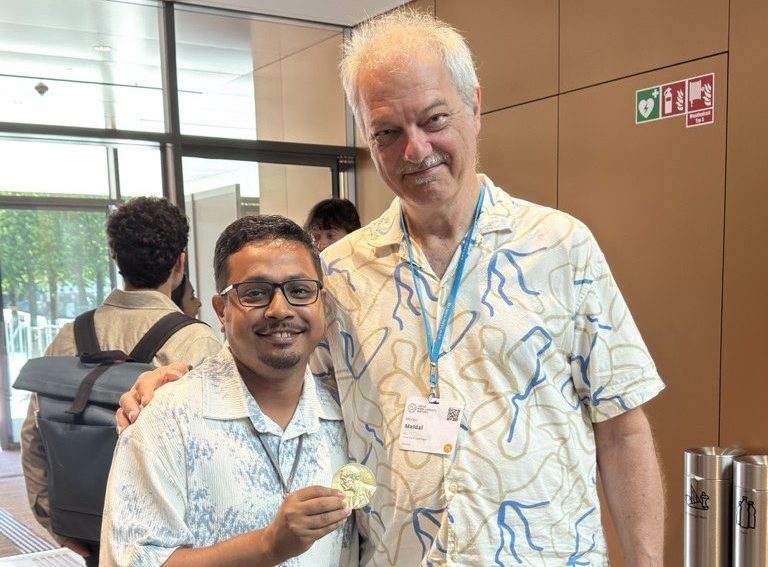
- SHIELD: Intelligent Reflecting Surface for Enhanced Integrated Sensing and Communication to Protect Vulnerable Road Users (Dr Md Noor-A-Rahim, University College Cork):
- Dr Noor-A-Rahim and his team are developing new ways to improve the safety of vulnerable road users such as cyclists and pedestrians in busy urban environments. The research aims to overcome the limitations of existing sensor-based systems and generate new knowledge and practical solutions that support safer, smarter, and more inclusive urban mobility.
- Valorising sustainable marine bioresources: exploration of the chemical diversity of Irish microalgae with antimicrobial, anticancer and antineurodegenerative properties [CHIMERA] (Dr Nicolas Touzet, Atlantic Technological University and Prof. Olivier Thomas, University of Galway):
- Dr Touzet, Prof Thomas and their teams will focus on using aquatic microscopic plant-like organisms to conduct frontier research on new marine natural compounds that could contribute to future health and wellbeing solutions. This work will support the development of sustainable, marine-derived natural ingredients for applications across cosmetics, health and medicine.
Research Ireland is also reimagining the ‘Awards’ stream of the Frontiers for the Future programme. While this stream remains open in its current form at present, this is in the process of being redeveloped in line with our Programme Plan. In 2026, it is set to be replaced with a new, integrated offering open to all disciplines, supporting excellent research across the entire research ecosystem.
Some highlights of funded Awards are:
- Spatio-temporal regulation of osteocyte mechanobiology to treat cancer-associated osteolysis (STROMCO) (Prof. Laoise McNamara, University of Galway):
- Prof. McNamara and her team are investigating why cancers that spread to bone, including metastatic disease and multiple myeloma, trigger such aggressive and damaging bone loss. This work seeks to generate crucial new knowledge to guide the development of future therapies for people living with cancer-related bone disease.
- LIGHT4CARB: Leveraging Visible Light Photocatalysis for Stereoselective Access to Unexplored Carbohydrate Chemical Space (Dr Chuanjie Loh, University College Dublin):
- Dr Loh will harness visible light to drive cleaner, more sustainable chemical reactions for building complex sugars that are vital for medicine and biotechnology. This award supports Dr Loh’s relocation from Germany to join the UCD, strengthening Ireland’s capacity in cutting-edge chemical research.
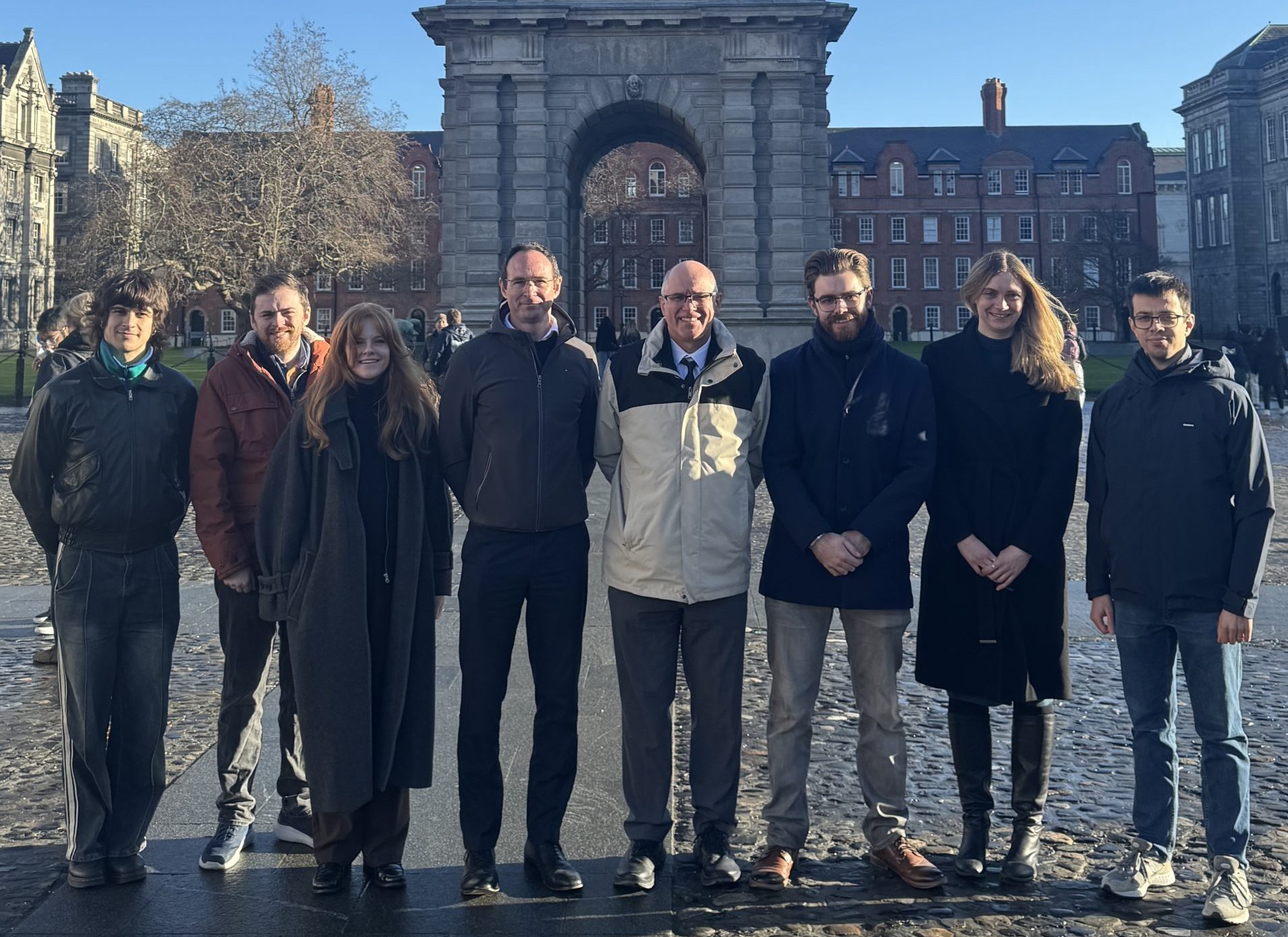
- Investigating whole brain blood-brain barrier (BBB) disruption in gliomas (Prof. Matthew Campbell, Trinity College Dublin):
- Prof. Campbell will use advanced imaging and genetic tools to investigate how the small blood vessels in the brain respond to Glioblastoma multiforme (GBM) growth. Primary brain tumours termed GBM are amongst the most aggressive cancers described. The team will also use pre-clinical models of the disease in an effort to develop new forms of therapy for this devastating cancer.
The 25 awardees will be based in eight research bodies nationwide: Atlantic Technological University (1), Dublin City University (3), Trinity College Dublin (4), Tyndall National Institute (3), University College Cork (3), University College Dublin (8), University of Galway (2), University of Limerick (1).*
*Note: There are 22 individual initiatives funded, three of which have co-PIs.
Image caption: Members of the Trinity College Dublin team working on ‘Investigating whole brain blood-brain barrier (BBB) disruption in gliomas’, which has today received a Frontiers for the Future Award. Pictured (from left to right): Dr Jeff Henderson, Dr Jeff O’Callaghan, Dr Isabelle Hunt, Prof Matthew Campbell (Lead), Prof Donncha O’Brien, Mr Adam McGlinchey, Dr Natalie Hudson and Dr Gergo Porkolab. (Photo: Trinity College Dublin).